
Long live the ordinary
What if we paid more attention to those simple, unstaged moments that defy the logic of staging?

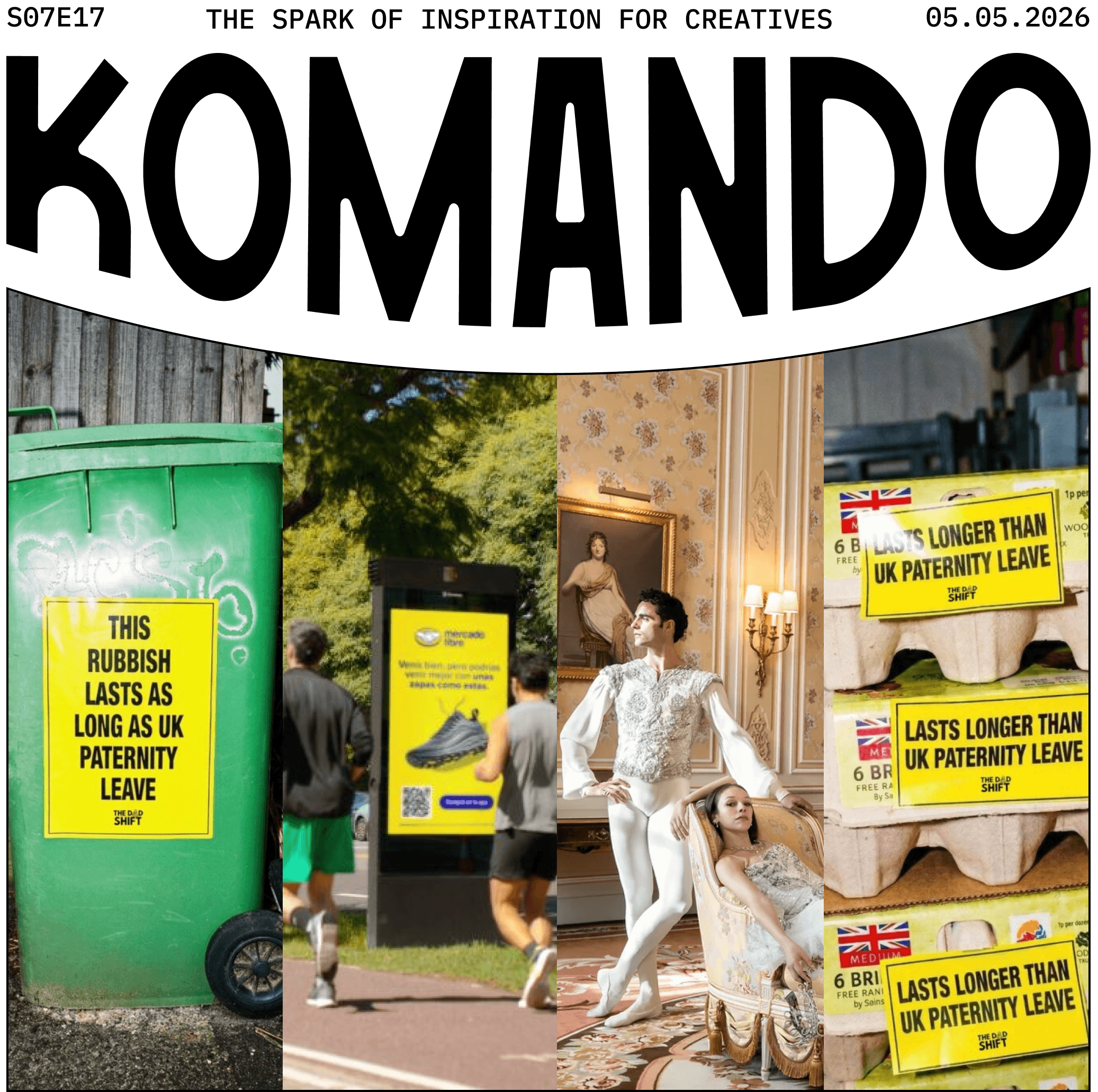
Hello there,
This might seem odd for a newsletter about creativity, but today I want to talk to you about… the ordinary. I was inspired by Agathe Hernandez’s series Extra-ordinaire: photos of everyday scenes (a table, a café, a light…) that, when captured with care, take on an almost precious quality. Nothing exceptional, precisely. And that’s the whole point. Ezechiel shares the same sentiment in the latest issue of Pomélo, where he champions “perfectly ordinary restaurants”—places with no concept, no storytelling, and no experience designed to be shared: just very good, very simple places where you eat well (and without waiting in line for an hour because it’s the latest trendy spot in Paris).
So, yes, long live those moments that aren’t meant to be optimized or turned into content. For years, we’ve tried to make every moment “extraordinary”: experiences, concepts, formats, venues… Everything had to be carefully planned, scripted, and unique. And eventually… everything ended up looking the same. So perhaps (?) we’re witnessing a reversal, and we’re returning to moments that aren’t meant to be optimized or turned into content, but simply lived to the fullest.
It works out perfectly: I’m wrapping up this issue from a train that’s taking me deep into the Lot region for a week. I haven’t planned a thing, except to stop by the tourist office, explore the local markets and flea markets, and soak up the atmosphere of Rocamadour, truffles, and rosé (we know how to live between the Dordogne, the Lot, and the Périgord!), to picnic by the river, and to let the locals’ recommendations guide me instead of Googling everything.
With that, enjoy the read and make the most of this well-deserved month off!
The billboard where you're the star
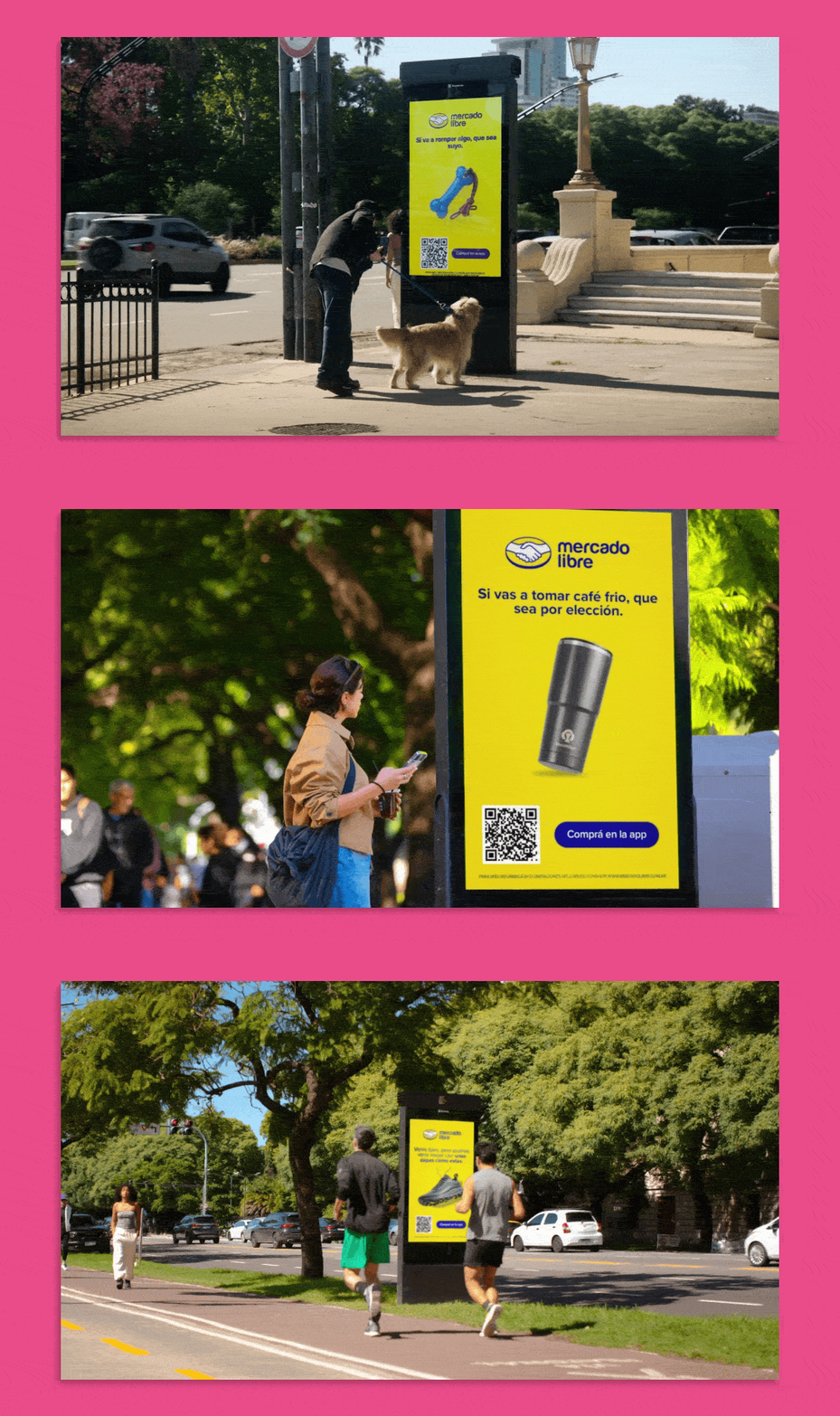
In short — What if street billboards could tailor ads to the specific context at any given moment? A cyclist riding by without a helmet? Boom, an ad for a helmet. A stroller spotted? Boom, a kid-friendly ad. Someone caught in the rain? Boom, an umbrella. This isn’t fiction: it’s the system that electronics retailer Mercado Libre is testing on the streets of Buenos Aires with billboards equipped with artificial intelligence that analyze their surroundings in real time (traffic flow, visual cues from passersby—such as athletic wear or business attire—and the presence of a dog). The system then matches these elements to a product from the brand’s catalog and displays it along with a QR code. If nothing is detected, the system relies on more general cues, such as the weather or the time of day.
Why it matters — For transforming a static medium into a responsive one, with contextual relevance, to enhance the message’s impact in a world where attention spans are increasingly fleeting. Every interaction becomes an opportunity to connect with the user: creativity ceases to be a closed system and becomes capable of adapting to and responding to the context. And this is just the beginning! Next, because the brand doesn’t just display the right message at the right time: it has also integrated QR codes, which shorten the customer journey between exposure to the ad and conversion (= purchase), a goal that is usually difficult to achieve in outdoor advertising. And because the brand has set its own ethical boundaries: no facial recognition, no data storage, and no profiling, prioritizing a useful experience… rather than an intrusive one.
→ Read the campaign case study
Things that last longer than paternity leave in the UK
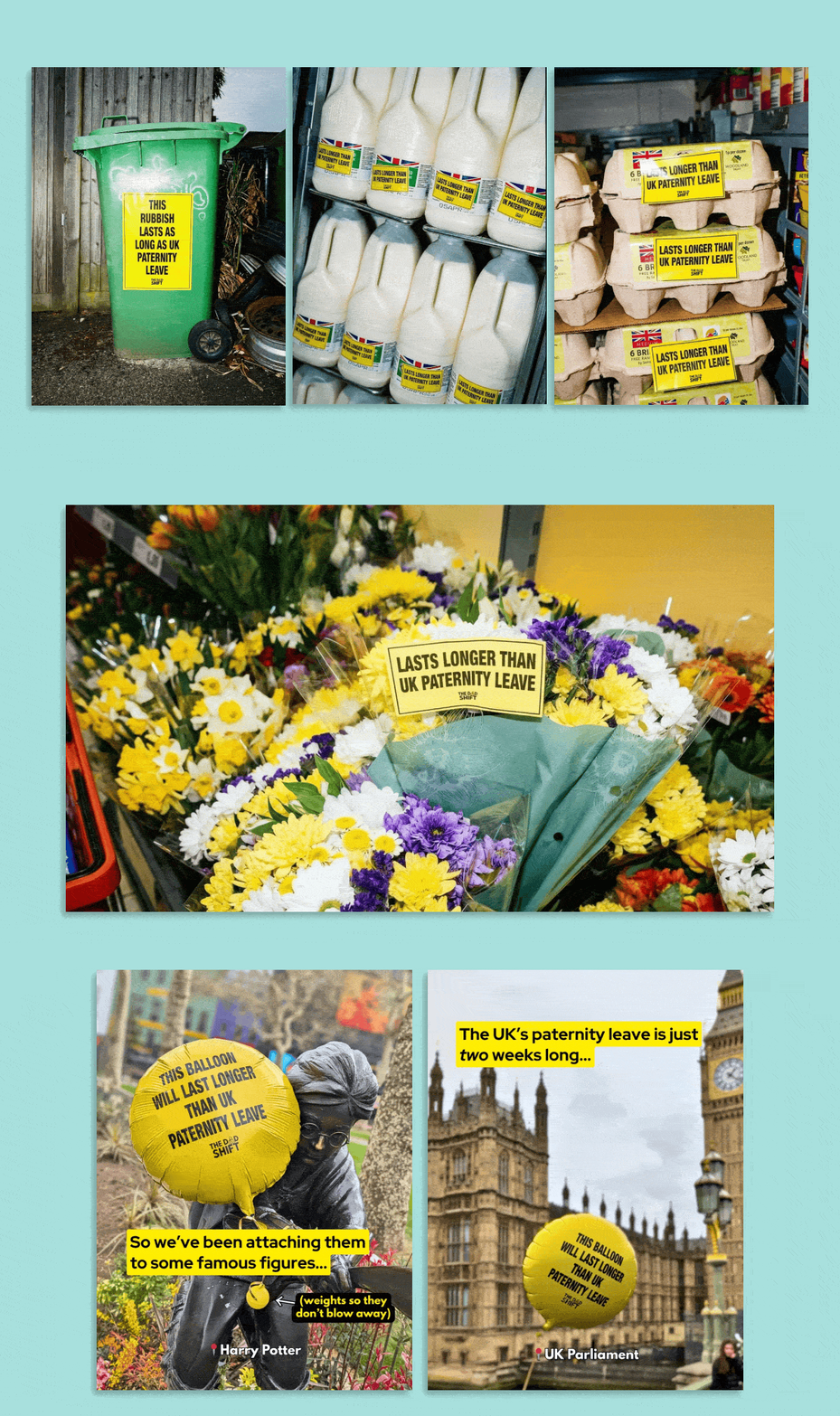
In short — In the United Kingdom, paternity leave is only two weeks (compared to an average of 12 weeks in Europe). So an organization, The Dad Shift, is fighting to change the law. Their idea? To place posters, stickers, and balloons on everyday items with a shelf life longer than paternity leave: flowers, bananas, milk, eggs, and balloons displayed at iconic London landmarks and monuments…
Why it matters — Because the goal is to make people uncomfortable by highlighting the absurdity of the situation: “If you give your partner a bouquet of flowers on the day your baby is born, you’ll be back at work before they wilt. The liter of milk you bought will still be good to drink, and the eggs will keep for several days,” explains the association, which has simultaneously launched a petition aimed not only at extending the length of maternity leave but also at securing better pay, which is currently less than half the minimum wage.
The police are exposing the scammers… and forcing them to respond
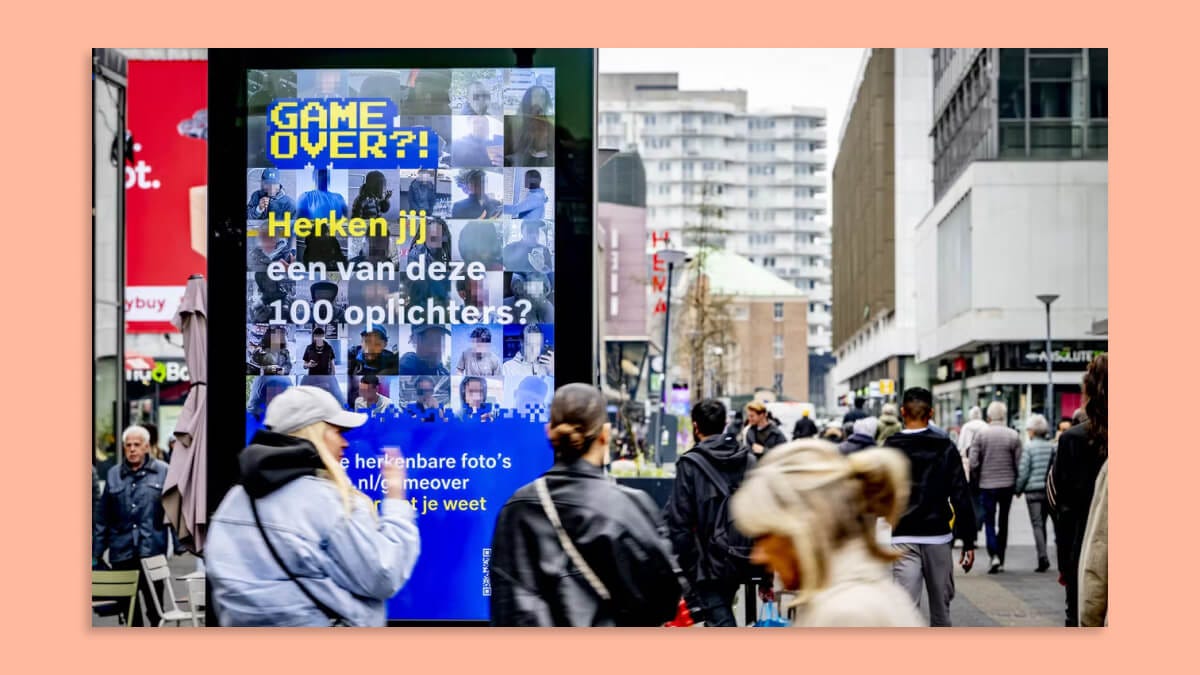
In short— In the Netherlands, the police have launched the “Game Over?!” campaign in response to a surge in scams (more than 13,000 reports in 2025). The idea? To publish CCTV footage of around 100 suspects in public spaces (bus shelters, shopping malls, social media, a dedicated website, etc.) with their faces initially blurred. The suspects have about 10 days to come forward; otherwise, their faces are publicly revealed, along with a call for anonymous tips.
Why it matters — The impact was immediate and measurable: out of about 100 suspects, 48 were identified within a few days—some as early as the blurring phase—and the police received a massive influx of tips (to the point of overwhelming their teams). This level of effectiveness is rare for this type of crime, which is often difficult to solve. But above all, the campaign relies on a very powerful mechanism: turning an investigation into a quasi-“public game” (the name “Game Over” actually comes from the slang of the scammers themselves). Public communication here does not seek to inform, raise awareness, or even deter, but rather to create social pressure and accelerate resolution through public exposure. With this approach, the police explain that they are primarily targeting low-level operatives—often young and vulnerable individuals exploited by criminal networks—but also hope to create a deterrent effect upstream.
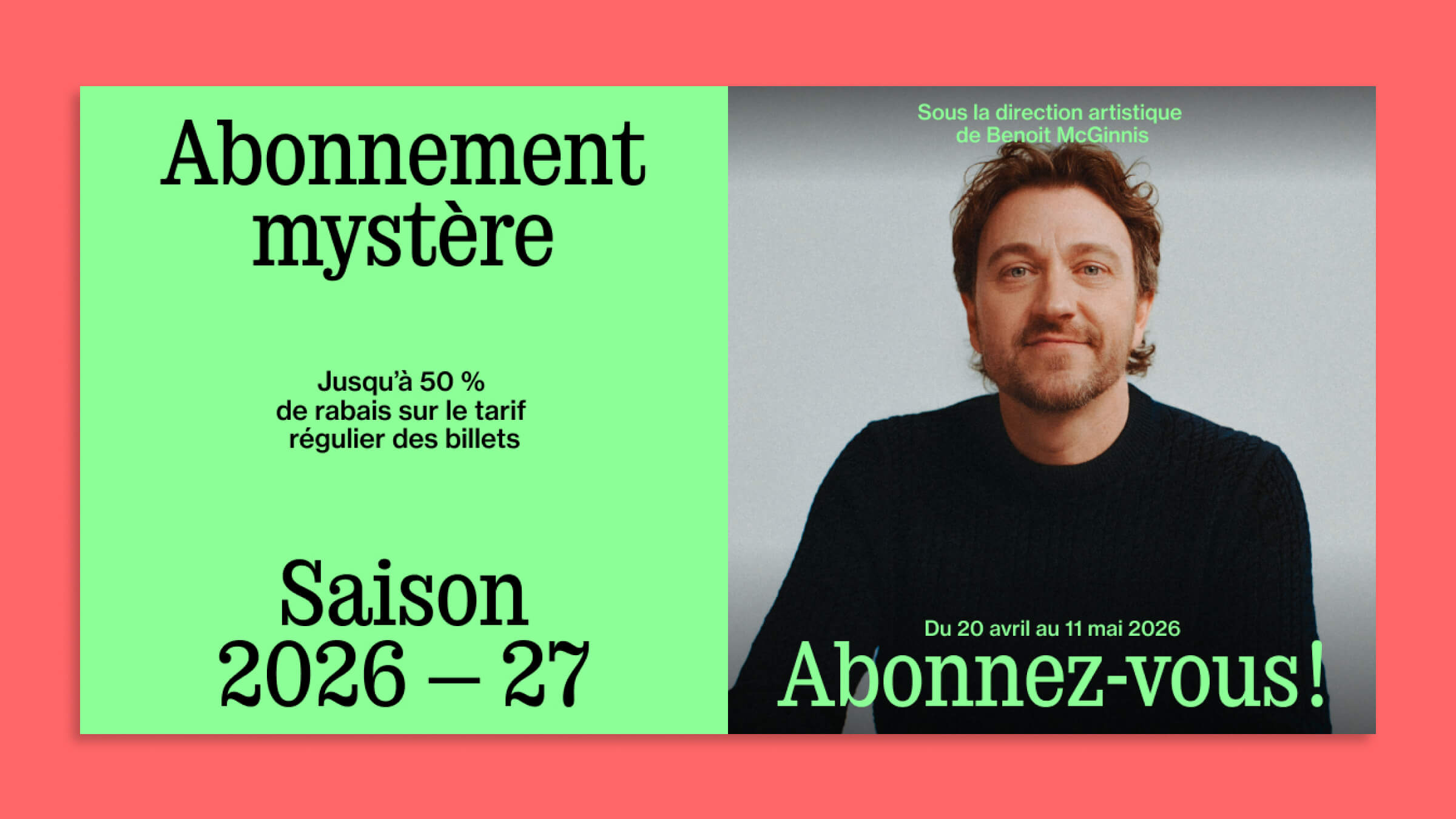
Buy a subscription… without knowing the lineup
In short — A Montreal theater is testing a “mystery subscription” for the 2026–2027 season. For three weeks, audience members can purchase a package of four shows at up to 50% off, with the best seats… without knowing the plays or the casts, which will be revealed in late May.
Why it matters — Because some cultural institutions no longer sell just a program but an artistic promise. The goal? To spark curiosity, add excitement to the experience, boost advance ticket sales, and attract an audience less reliant on headliners. And this is a real trend we’re seeing emerge, where mystery becomes a driver of engagement. This is the case, for example, with Secret Cinema in the UK, which holds screenings where both the film and the venue are kept secret until the last moment. Festivals and venues also offer “blind tickets” to attract curious audiences rather than fans of a specific name. There are also occasional surprise ticket offers at certain European theaters or venues, where only the date or genre is known, or mystery boxes at bookstores. What do they have in common? In a world where everything is planned in advance, compared, and optimized, mystery becomes a value—provided the brand is strong enough to build trust. And ultimately, perhaps that’s the real insight: we no longer buy just content; we (also) buy the desire to be surprised.
→ Learn about the mystery subscription concept
When a luxury hotel becomes a cultural hub
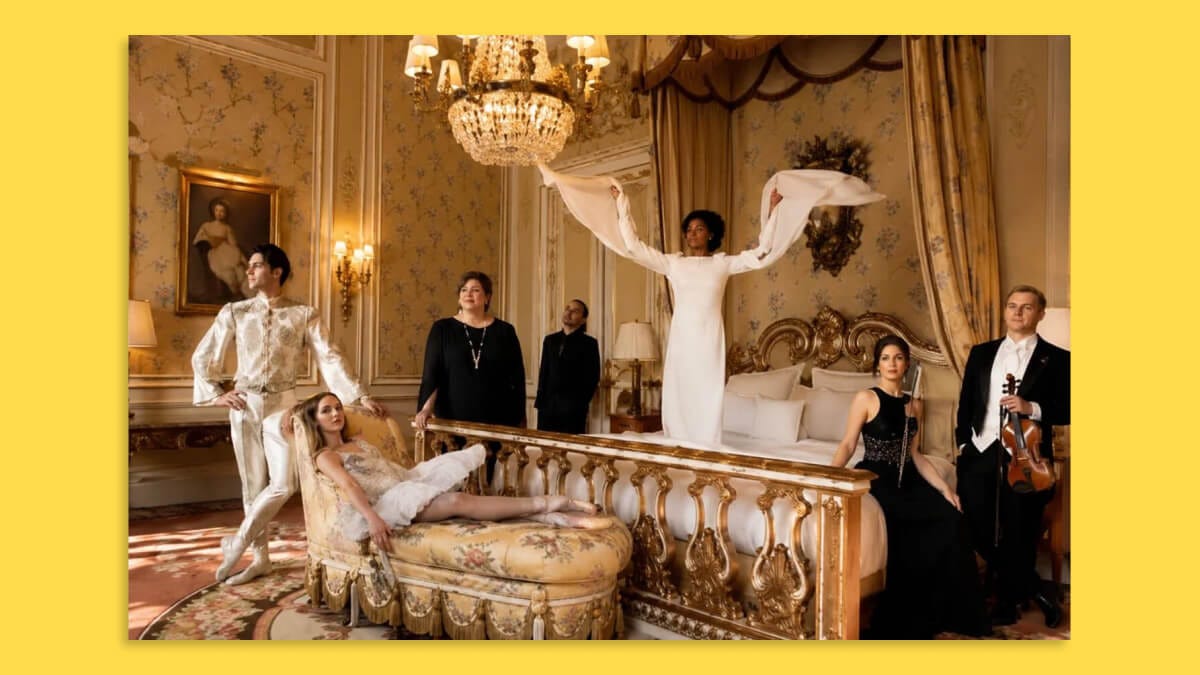
In short — The Ritz Paris is launching its first cultural festival, Les Nuits Étoilées, featuring a multi-day program designed as an immersive mini-festival. The lineup includes intimate concerts (piano, jazz, vocals), readings and author meet-and-greets, screenings, and artistic performances, as well as more experiential events such as themed gourmet dinners, tastings, and conversations about culture and the art of living. The hotel’s various spaces—lounges, gardens, and courtyard—serve as stages. Access is not limited to guests: a ticket office allows the public to attend some of the events.
Why it matters — Because instead of hosting events or providing sponsorship, the Ritz handles production, curation, and distribution in-house. It becomes a venue, a programmer, and a media outlet all at once, which allows it to fully control the narrative and the quality of the experience by offering exclusive cultural events. By partially opening its doors through ticketed events, the Ritz attracts a demographic that would never stay there but can enter through culture. It’s an indirect acquisition strategy that fuels desire without compromising exclusivity. I would have found it even crazier if the festival had taken place in areas usually closed to the public (e.g., the kitchens) or in a suite, as the photos suggested (e.g., a watch party for a cult film in a redesigned suite).
To go further — This model can easily be adapted by other players with a physical space and an audience. A department store like Le Bon Marché could transform its floors into a week-long editorial festival (featuring food, design, and publishing) with talks and installations, thereby becoming a cultural destination. A brand like Nike could turn its flagship stores into programming hubs with workouts, conferences, and screenings, shifting its focus from retail to community. A coworking player like WeWork could organize a festival of the new economy with workshops and talks open to the public, establishing itself as an intellectual platform. A restaurant group like Big Mamma Group could also create its own culinary festival featuring guest chefs and experiential events to transform its restaurants into cultural venues.
→ Dive into the concept behind the 1st Ritz Cultural Festival
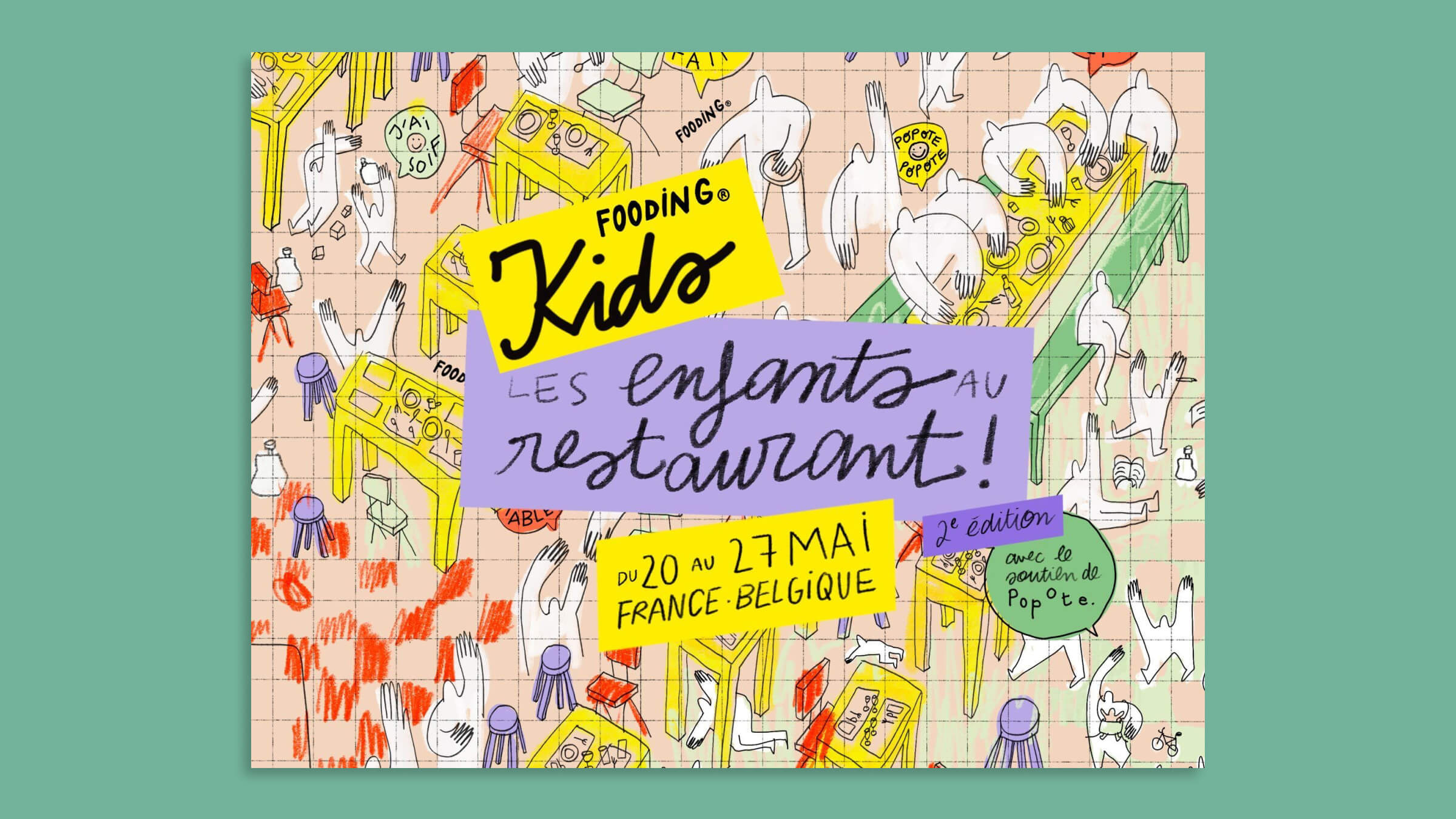
Fooding puts children back at the center of the table
In short — The media outlet is organizing the second edition of its “Kids at the Restaurant!” festival, which will take place over a week in May at 40 restaurants across France and Belgium, where children will be the real guests: menus designed just for them, dishes that are kid-friendly (yet challenging), and special experiences. The idea is to move beyond the classic steak and fries and offer a genuine culinary discovery tailored to children.
Why it matters — More than just a food initiative, it’s a cultural statement: treating children as full-fledged guests (rather than a burden). By temporarily transforming restaurants into “kid-first” spaces, Fooding doesn’t just change what’s on the menu… it changes how we view their place at the table.
To go further — What if we took this idea to its logical conclusion? Today, the experience remains centered on the plate. But we could imagine: tables designed with them in mind (height, presentation, interaction with the dishes), menus they can put together themselves, like a game, meet-and-greets with chefs in the kitchen to learn and taste, ritualized “first gourmet restaurant” experiences… In other words: not just adapting the menu, but rethinking the entire restaurant experience from a child’s perspective. That’s where the initiative would go from being a nice idea to a real shift in standards.
IT MIGHT BE A SMALL DETAIL TO YOU, BUT...
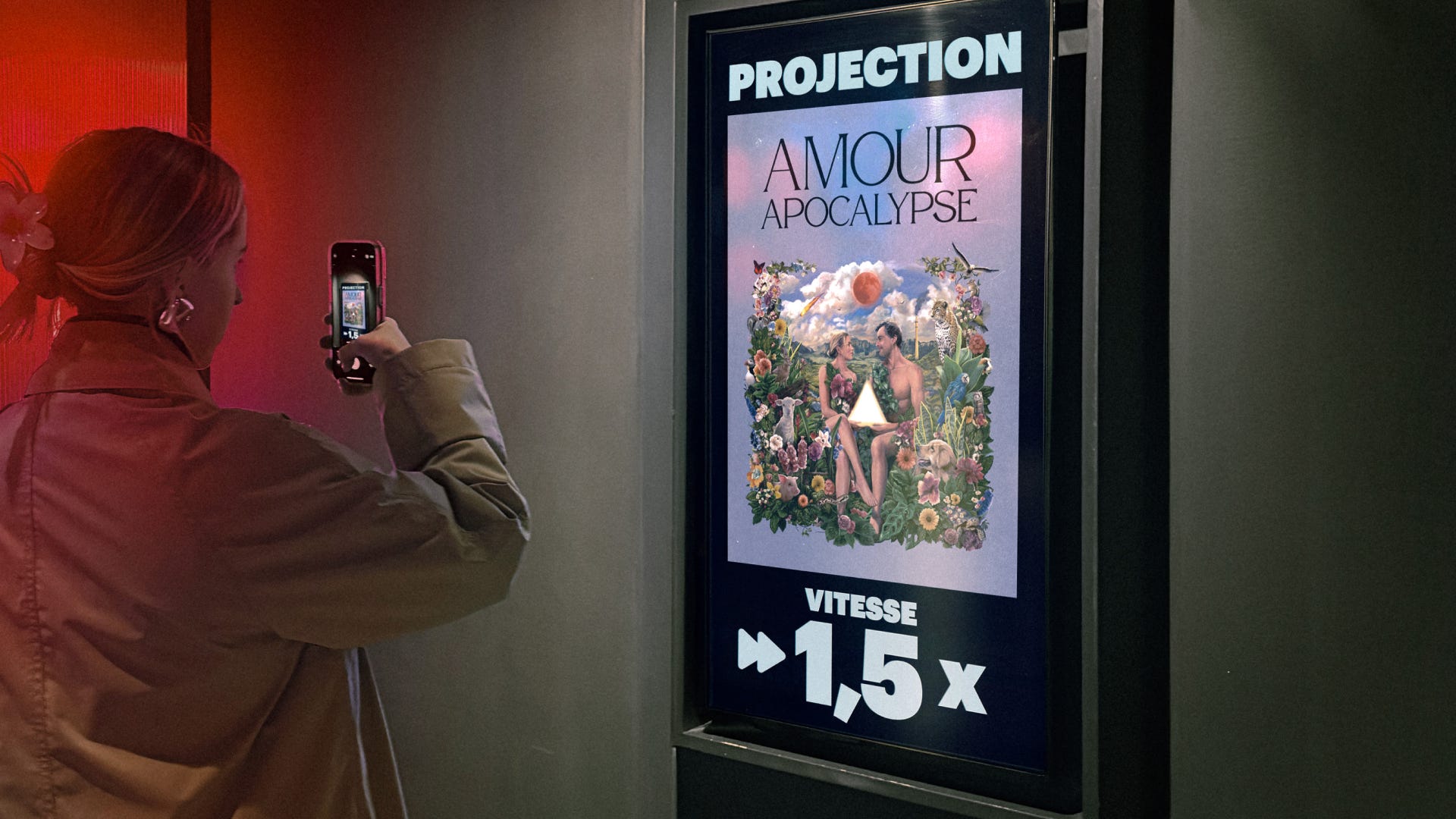
🍿 A movie theater showing a film at 1.5x scale — This isn’t a joke: that’s exactly what a Quebec movie theater is offering. It’s just a one-time “stunt” for a single screening, designed to spark discussion and challenge our sometimes absurd habits, in order to better highlight the unique value of the movie theater—one of the last places where our attention is fully focused for nearly two hours without notifications or scrolling.
🚕 The hiring process begins before the formal interview — Duolingo is hiring taxi drivers to assess candidates' manners. Let's be honest: from an ethical standpoint, this is definitely a yellow card...
🍽️ Bringing Gen Z Back to Restaurants — Restaurants in the Dordogne (including a Michelin-starred one) launched a limited-time promotion in April: 30% off for those under 30. The goal? To make the experience accessible to younger people, in the hope of getting them interested in dining out.
☔️The more it rains, the less you pay — A hotel in Pornic, in the Loire-Atlantique region, came up with a unique idea to attract tourists despite the bad weather (and, above all, to turn the weather into a positive): to refund €1 on the hotel room rate for every millimeter of rain that falls.
📵 “No Working Allowed”: When Au Bureau Takes the Opposite Approach to Remote Work — The restaurant chain Au Bureau has launched an unconventional campaign: explicitly banning work in its restaurants, embracing its British-style positioning (a lively spot to eat, drink, watch games, or hang out), in contrast to most cafés, which have become coworking spaces whether they like it or not. Beyond the advertising, they could have gone further: phone lockers at the entrance, partnerships with The Offline Club to host reading parties and phone-free evenings…
👀 Queues attract more queues — France 2’s 8 p.m. news took a closer look at a common marketing strategy in Paris: those shops where the line… actually boosts business and visibility.
📚 Meaningful reading parties — The publishing house Nathan teamed up with The Offline Club to organize a reading party for one of its Chinese novels at the Cernusch Museum. On the agenda? A group reading, as well as a concert of Chinese music, creative activities, and a treasure hunt through the museum. All of this, without phones.
💌 2,000 handwritten letters to win over clients — The founder of an agency chose an unconventional strategy to launch his business: writing personalized (very short) handwritten letters to prospects on high-quality paper, sometimes including a £1 coin taped inside as a playful nod to the promise of ROI. A way to stand out in an industry saturated with emails and automated messages. The result? These letters have generated half of his business to date.
That's all for today! See you on Tuesday, May 19, for the next issue!
📬 Not subscribed yet? Sign up to receive the next issue:
❤️ If you enjoyed this issue, please help spread the word: feel free to like and share it!
Love what your doing in every edition. Very inspiring.