Was it REALLY worth a LinkedIn post?
An anonymous page takes aim at bullshit posts and clickbait. It's delicious.

Olà ! Tudo bem ?
I hope you had a great summer! As for me, I'm back in great shape... and motivated for a new season of Komando!
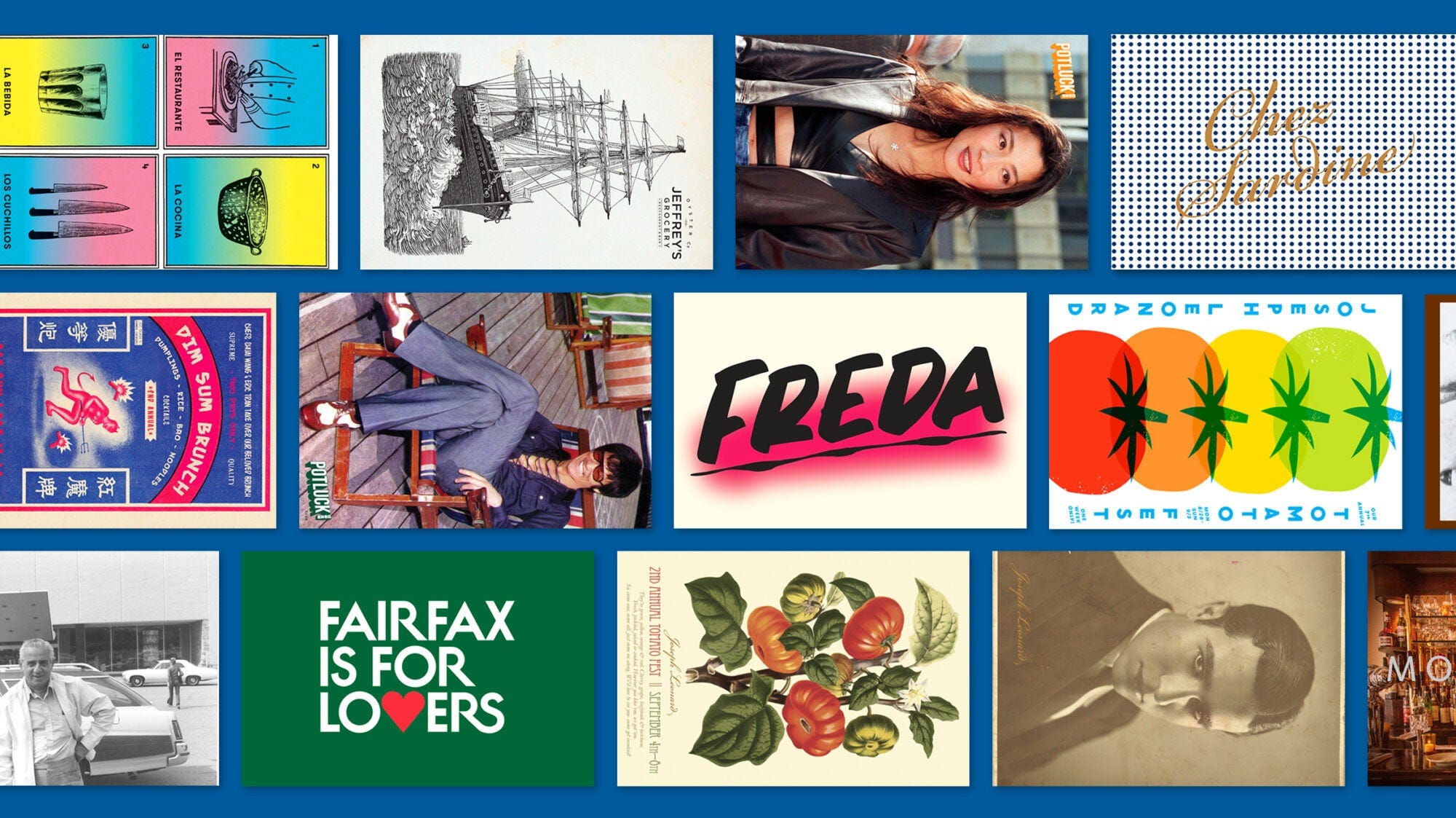
Today, with summer in full swing, I wanted to talk to you about... postcards. Because, yes, at a time when we are constantly texting each other and documenting our every move in real time on Instagram stories, this little piece of cardboard has regained its value for me. Postcards are a tribute to the slow pace of life. They require taking the time (and effort) to write. You never know when the letter will arrive. They also give you the exhilarating feeling of being able to write to anyone (because while you can easily ignore an email, it's hard to ignore a physical object...). So, just this once, I sent a few mystery postcards from Rio to people who weren't expecting them but who, in one way or another, have made an impression on me in recent months...
And I'm not the only one rediscovering the appeal of this type of gesture: the media outlet Les Others also published a short tribute to postcards that I found very cool ("what if a few scribbled words were worth more than any digital message?"), before finding 15 (real) postcards with collector Thibault Hollebecq (from the awesome Instagram account @ici_il_fait_beau, which hunts down and shares postcards from strangers during the post-war boom years).
We also tend to forget that postcards are also widely used in restaurants, particularly in the US, along with the bill. The aim? To enable customers to write to their friends and family to recommend the place. And all at the restaurant owner's expense. In reality, few customers dare to write and send these cards (mainly because they don't know that the restaurant owner pays for the postage), but I think it's an original idea and one that restaurants in France should adopt, provided they use graphics that are more than just a photo of the place. No one wants to send a card from a restaurant, but if it reflects a region and takes you on a journey, then it makes perfect sense...
Now it's time for the back-to-school issue, which, to reward you for your patience over the summer, will be a little plumper than usual, as always.
On that note, happy reading!
🫡 Kéliane — Mail / Instagram / Linkedin

PS: I also have a second, more personal newsletter, Sans Filtre, which is like a diary. It will be back in a few days to tell you about what goes on behind the scenes at Komando, rants and raves, thoughts, side projects, etc.
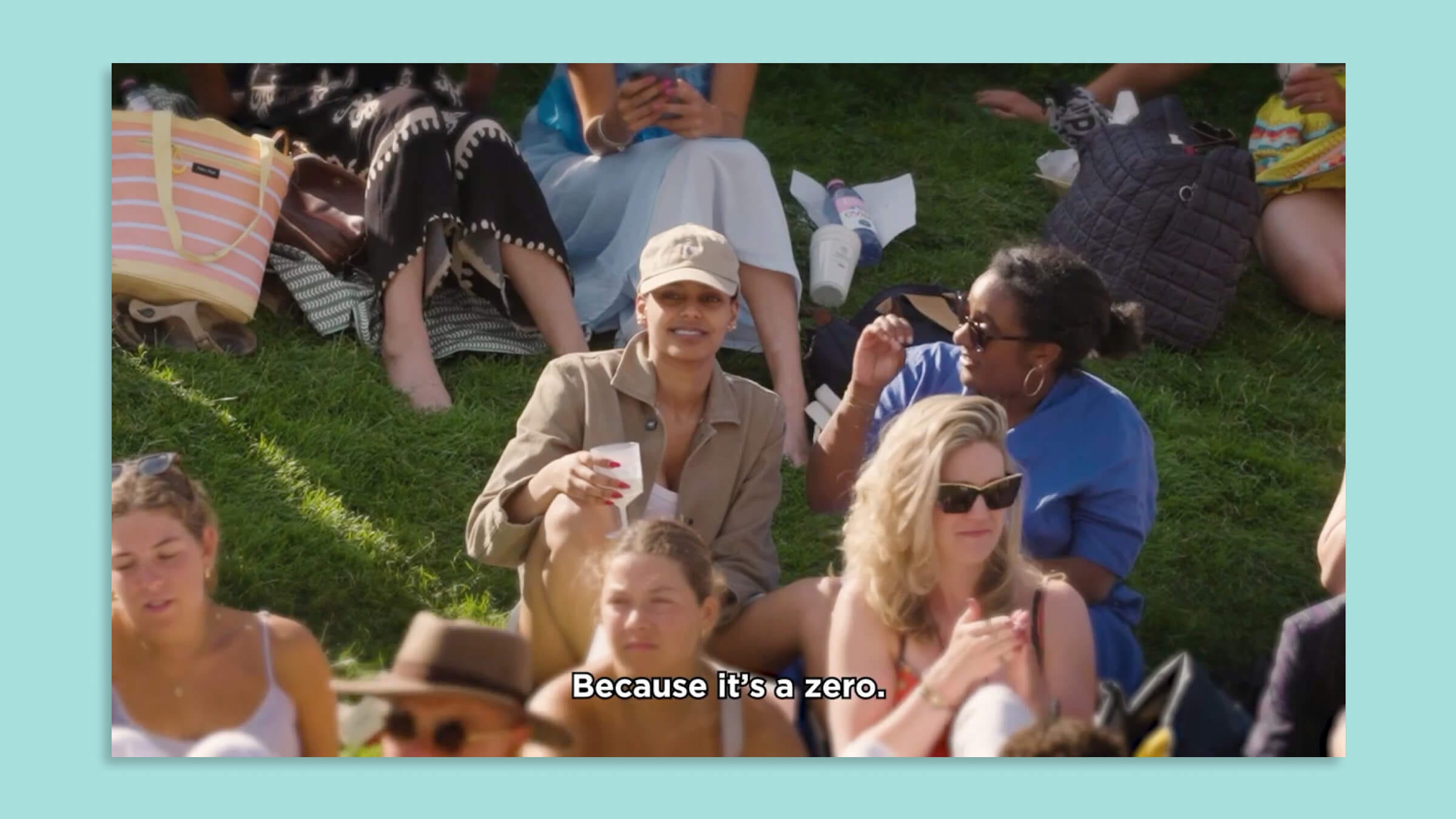
How Wimbledon came up with the idea of filming not the players... but the spectators
In short — It's counterintuitive, but the famous tennis tournament doesn't just share videos of players or match highlights on Instagram: it has a new signature format called "Overheard." The concept? We find ourselves listening to spectators' conversations as they comment on the matches, with the most interesting excerpts, of course. And the format is a hit: 8.9 million views, 500k likes.
Why it matters — You're probably wondering how they do it. Well, it's simple: the Wimbledon team spots spectators who seem to be deep in conversation, asks their permission to film them and equips them with a small lapel microphone, telling them to continue talking naturally, without being sure that they will use the footage, and films them from a distance. And the key is simply that they film them for 20 minutes each time, to prevent them from being too nervous and awkward at the start... and above all, so that they eventually forget they are wearing the microphone.
What if… — One could imagine many possible variations by offering visitors microphones and filming their conversations as they wander around a trade show or event (hello Vivatech), watch a fashion show during Fashion Week, dine in a restaurant, watch a TV show, or stroll through BHV or an exhibition.
To go further — The British channel Channel 4 has a similar concept, Gogglebox: it films viewers at home on their sofas as they share their reviews of the week's best TV moments.
→ See an example of Overheard at Wimbledon
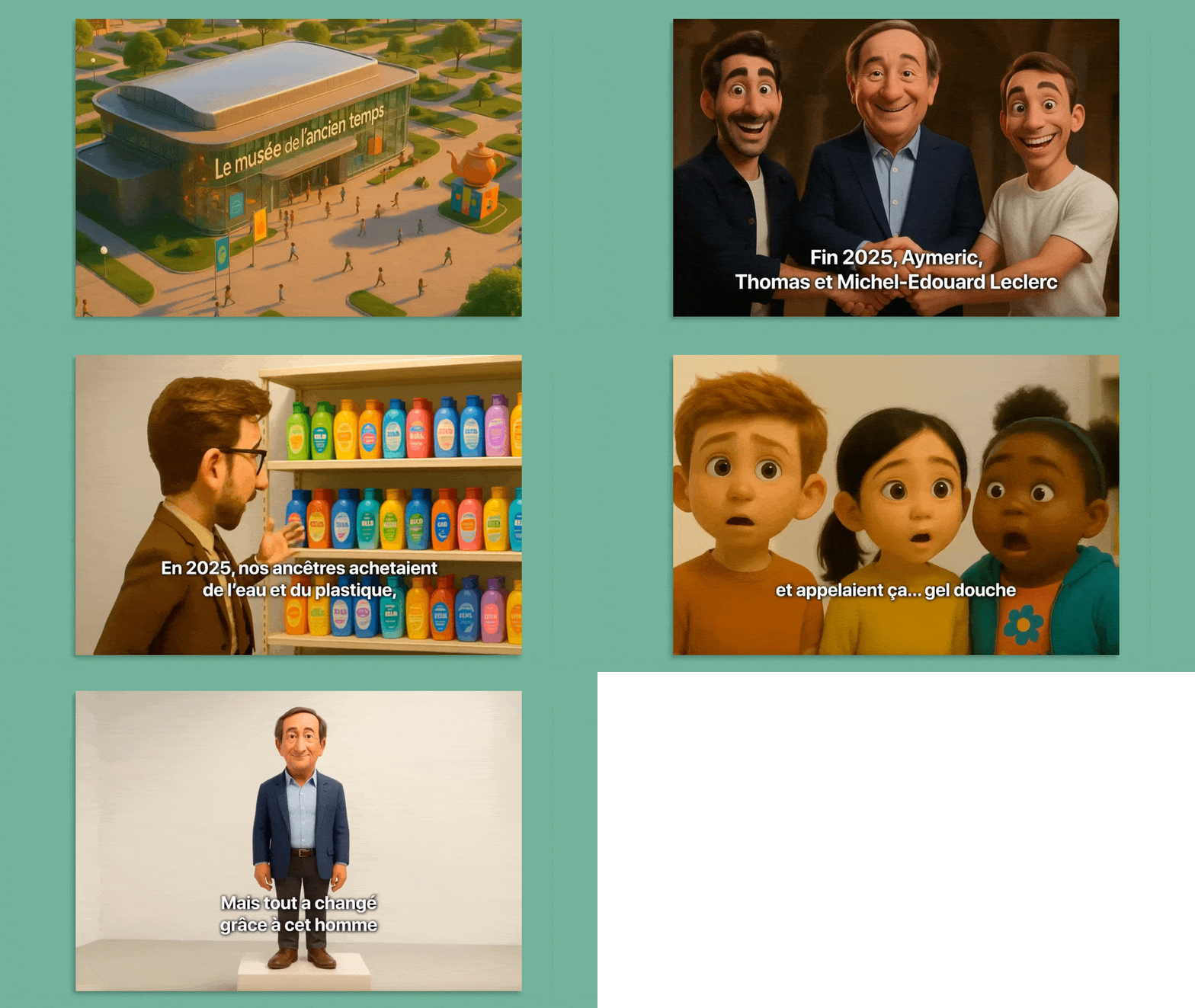
What if, in 2050, the only places where single-use plastic could still be found were in museums?
In short — The rechargeable product startup 900care is appealing to Michel-Edouard Leclerc with a humorous mini-film created using AI. The pitch? A group of children on a school trip discover objects from the past with bewilderment: disposable plastic bottles. The goal? To convince Leclerc to stock its rechargeable products in reusable bottles on its shelves.
Why it matters — The startup had the bright idea of calling on internet users to comment in order to get Michel-Edouard Leclerc's attention and convince him to have coffee with the two co-founders (bingo, it made it all the way to the CEO's keyboard). This was a clever move, both in terms of creating a collective adventure and in terms of visibility, since LinkedIn's algorithm particularly values comments, which boost the visibility of posts.
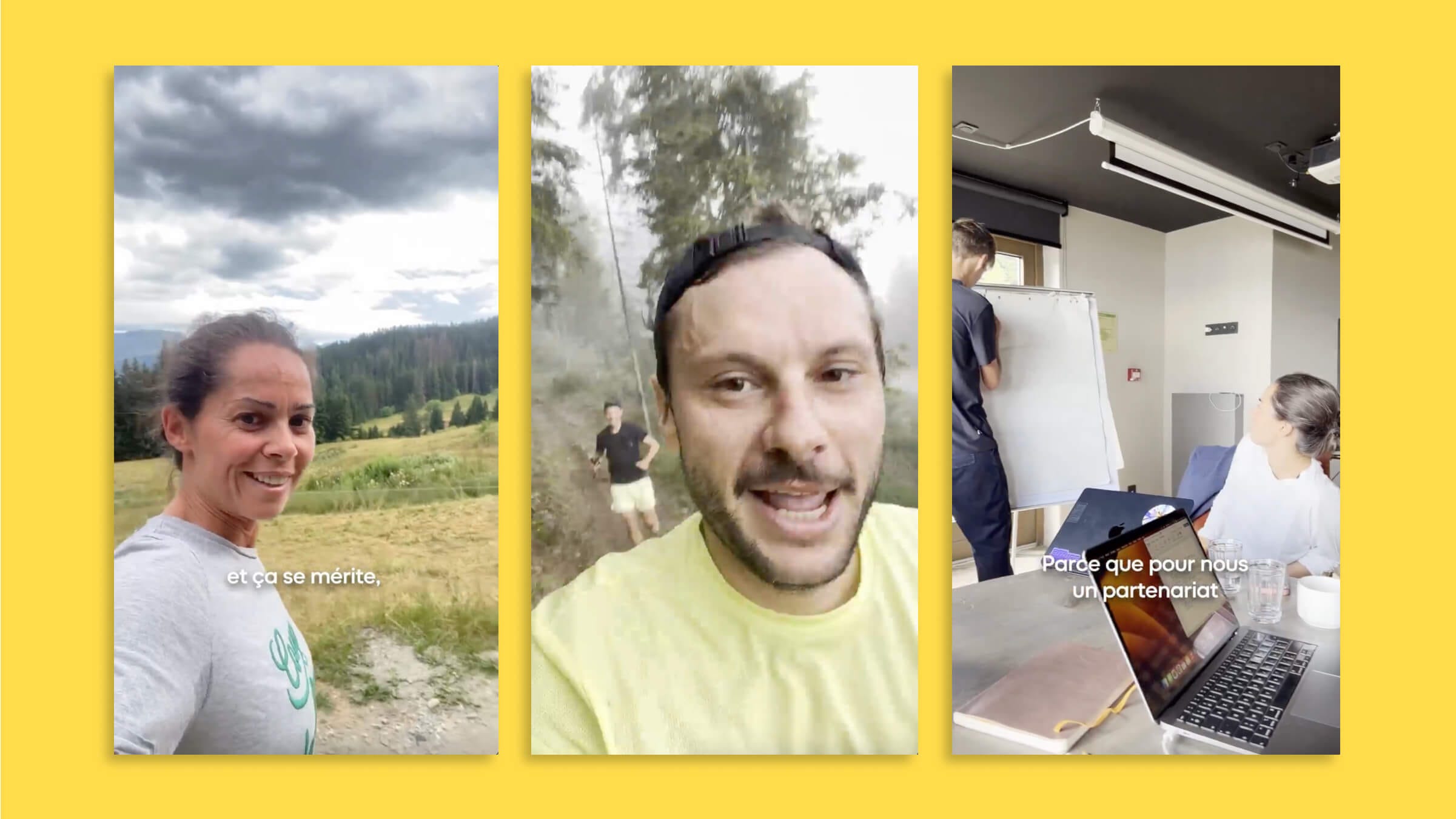
Explaining a partnership on camera in a vlog
In short — The French startup Back Market is entering the world of sports this year by sponsoring its first athlete, Baptiste Chassagne, the rising star of French ultra-trail running. And the startup had the great idea of documenting it on camera, visiting the athlete at his home in Combloux for two days, both to work on the partnership's communication plan and, above all, to get to know him.
Why it matters — Because the format is raw, simply filmed on an iPhone by the communications director and CEO, without any fuss. We go behind the scenes of a partnership where the brand takes the time to explain to the camera its vision of a successful collaboration that is consistent with its DNA. In short, it's human, unfiltered... and therefore it works!
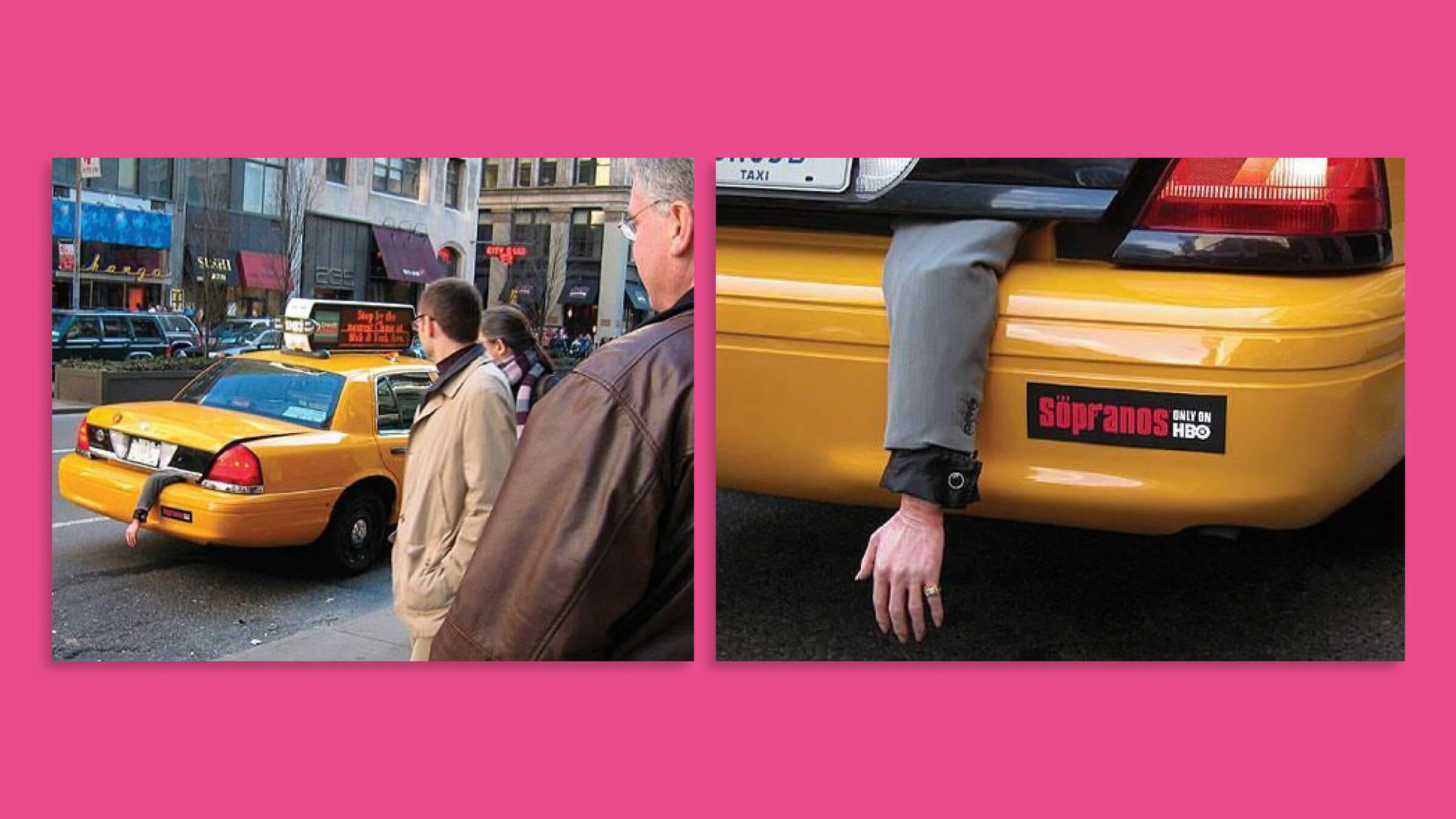
A taxi with an arm sticking out of the trunk...
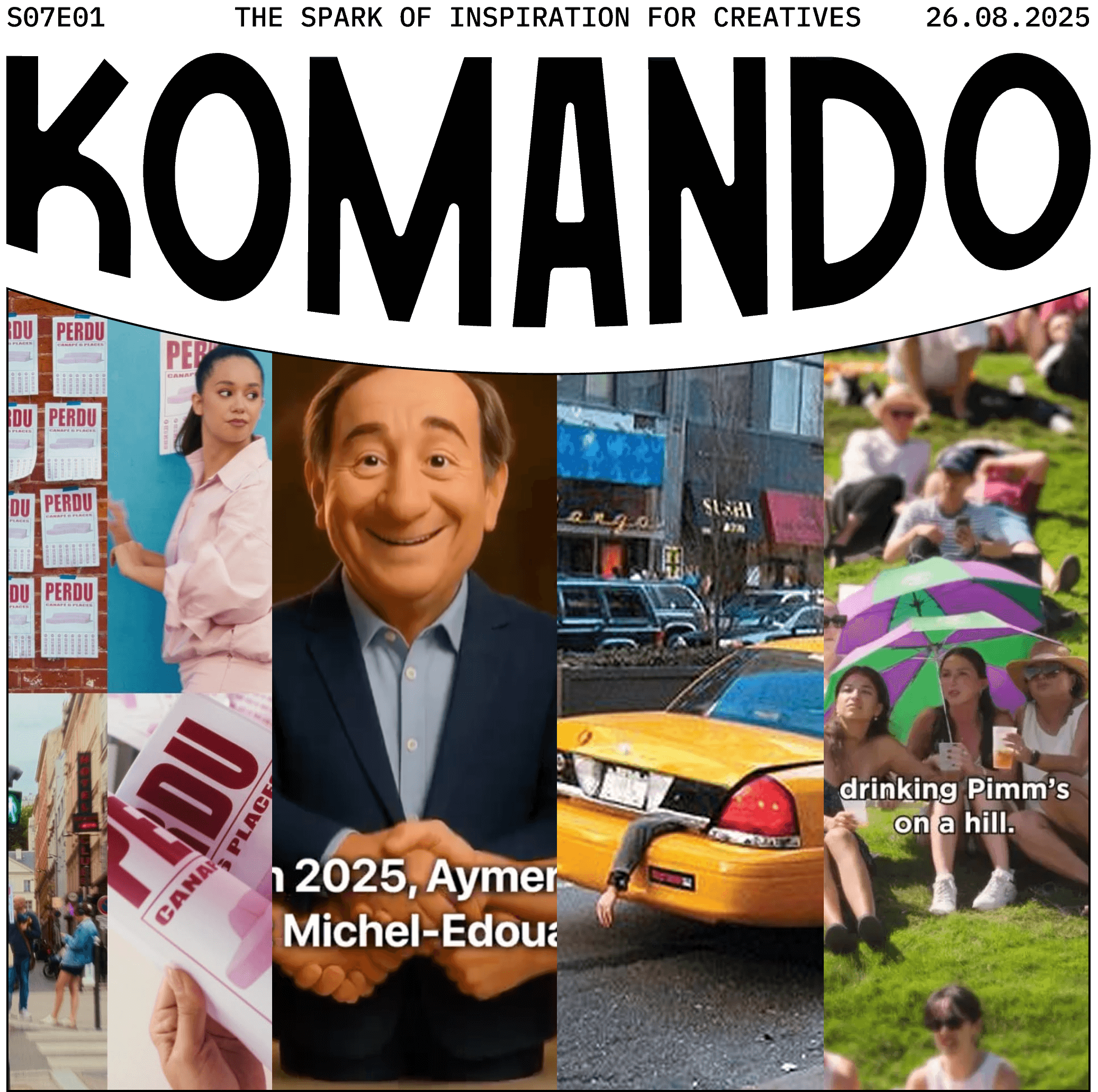
In short — In 1999, for the launch of The Sopranos series, HBO deployed a fleet of taxis in New York City... with a fake arm sticking out of the trunk. This attracted the attention of passersby, some of whom took photos, intrigued, while others even called the police.
Why it matters — Because using the codes of a mafia murder makes sense with the very purpose of the series: the stage is set! And because we weren't even in the age of social media yet: imagine how viral the campaign could have been today.
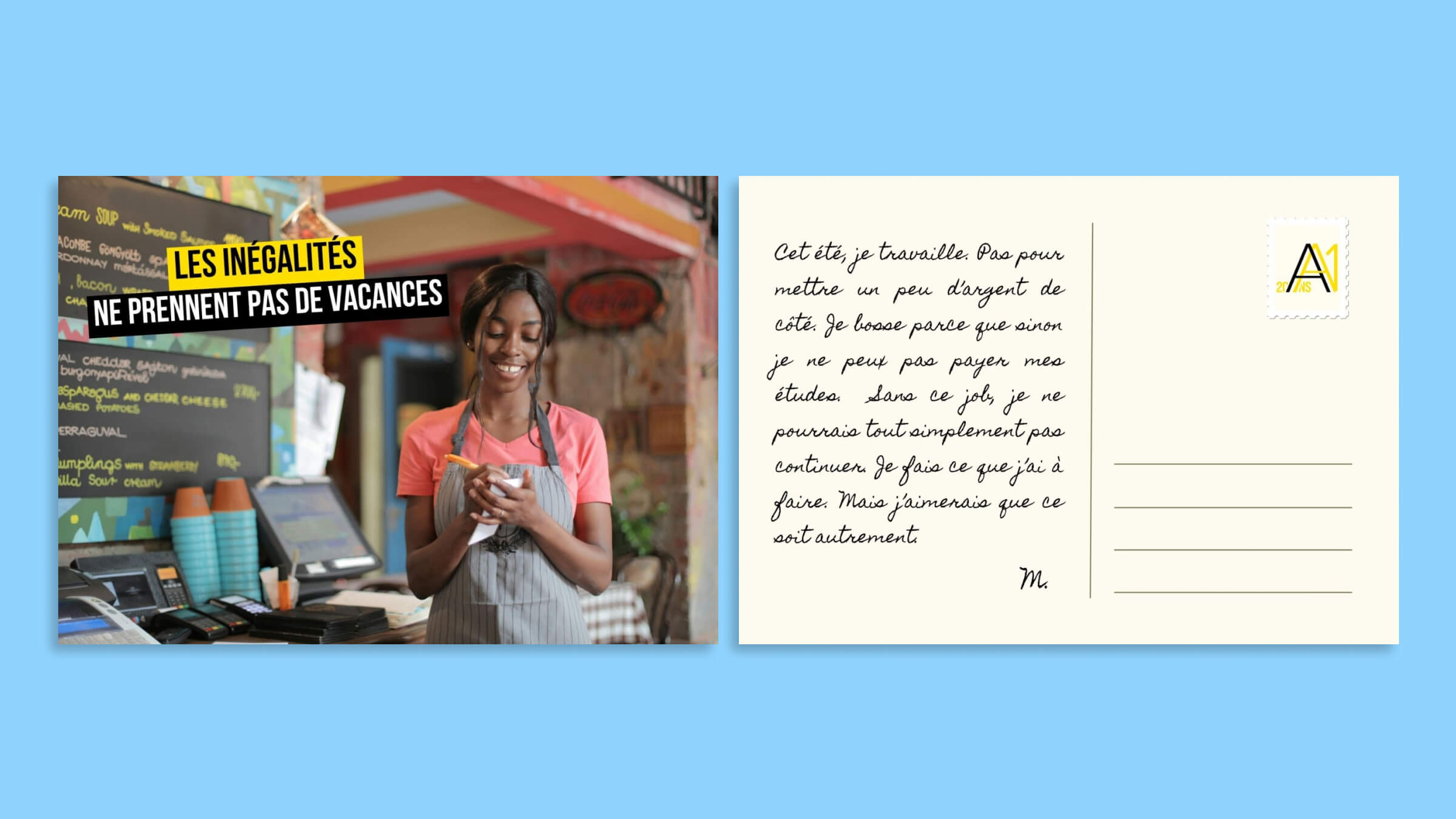
Postcards to remind us that inequality doesn't take a vacation
In short — For young people from working-class backgrounds, summer does not necessarily mean relaxation, but rather hardship (summer jobs, searching for accommodation, intensive revision, etc.). Despite the summer economic slowdown, inequalities do not take a vacation. So throughout the summer, to raise awareness among decision-makers—whether political, economic, or media— the Article 1 association, which fights social inequality and helps young people from working-class backgrounds aged 16 to 25, has decided to send them slightly offbeat postcards, written by their young people, each recounting a (true) situation, accompanied by an explanatory letter.
Why it matters — The goal? To highlight the reality of summer vacations for young students from working-class backgrounds, invite decision-makers to meet with the association, and, above all, encourage them to get involved.
→ See the postcards in question
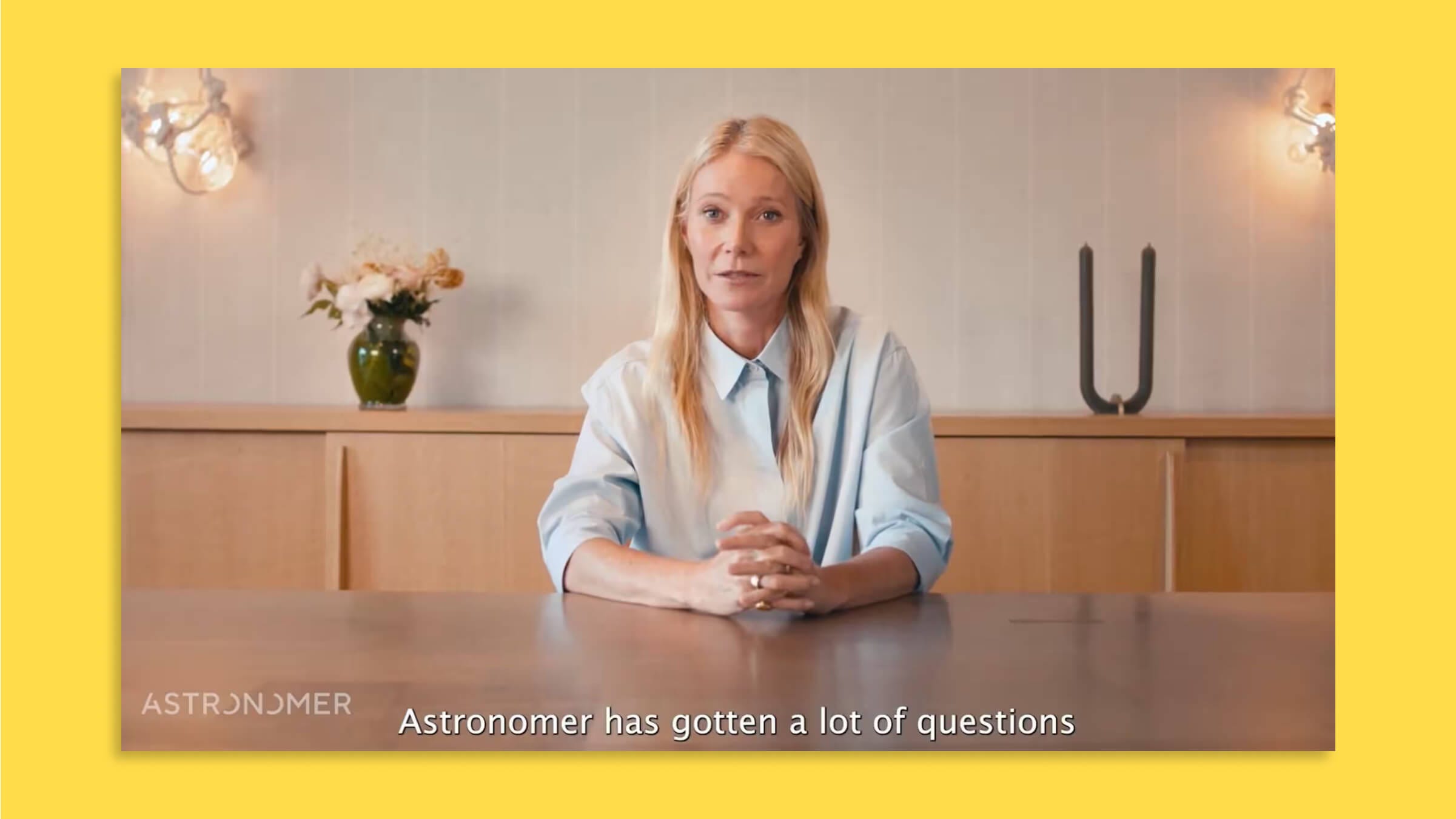
Crisis communication, Astronomer style
In short — You probably followed it this summer: Andy Byron, CEO of American data startup Astronomer, was caught in the act of adultery at a Coldplay concert by a kiss cam and forced to resign... All of which affected the brand's reputation. But the brand decided to bounce back and turn the bad buzz to its advantage. It called on actress and former companion of Coldplay singer Gwyneth Paltrow to act as a temporary spokesperson for the brand, in a quirky video. The actress takes part in a truncated question-and-answer session, each time bringing the subject back to very serious issues.
Why it matters — Because many brands would have been content to remain silent or make a public apology. The strategy of turning the situation around to focus discussions on their expertise and restore their image is a bold one - and culturally easier to do in the US than in France - but in my opinion, it paid off. The only downside, however, is that even if they had to be reactive and put in so much effort, they could have pulled out all the stops and sold their service better.
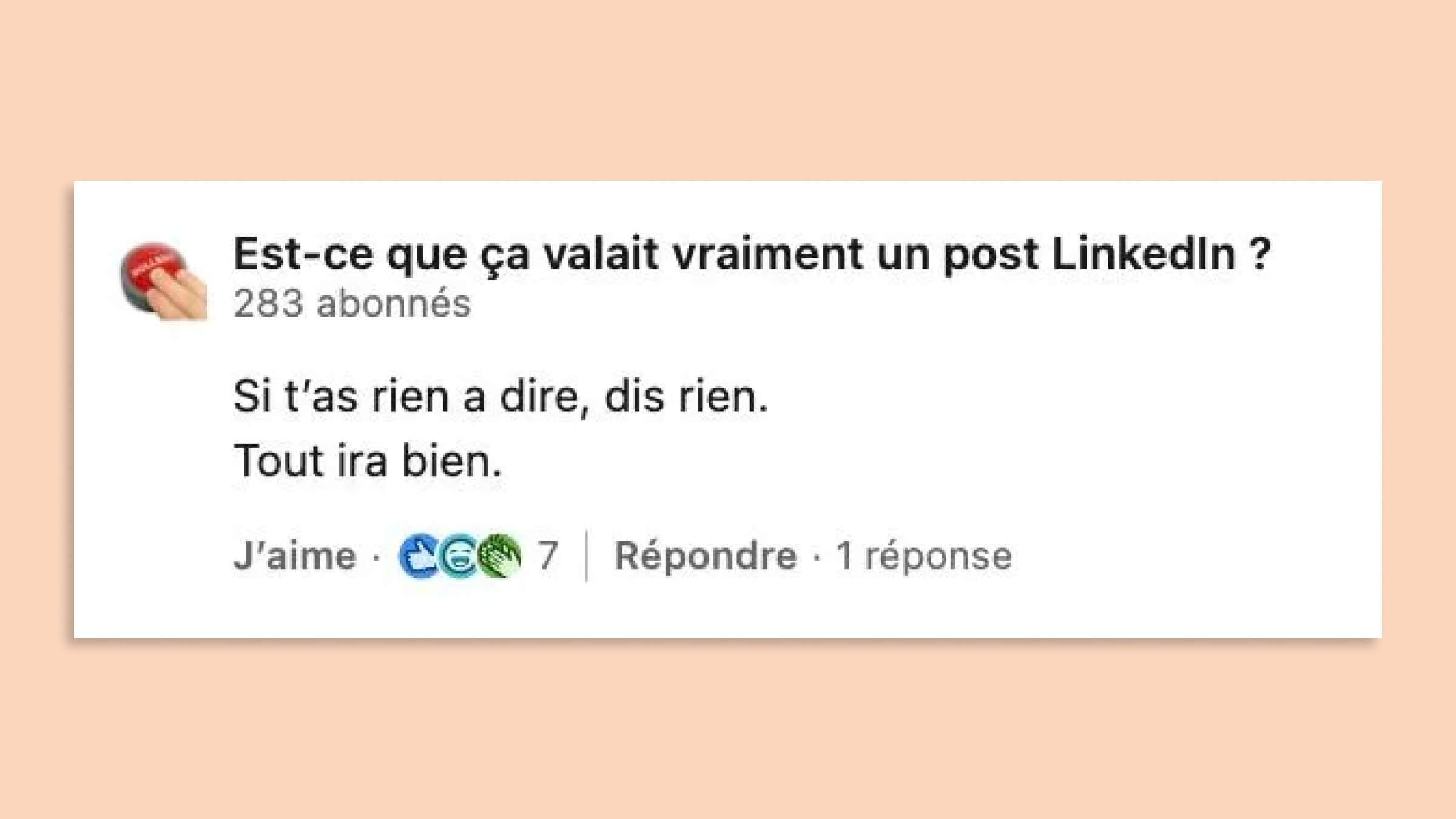
Bonus — The best LinkedIn page ever
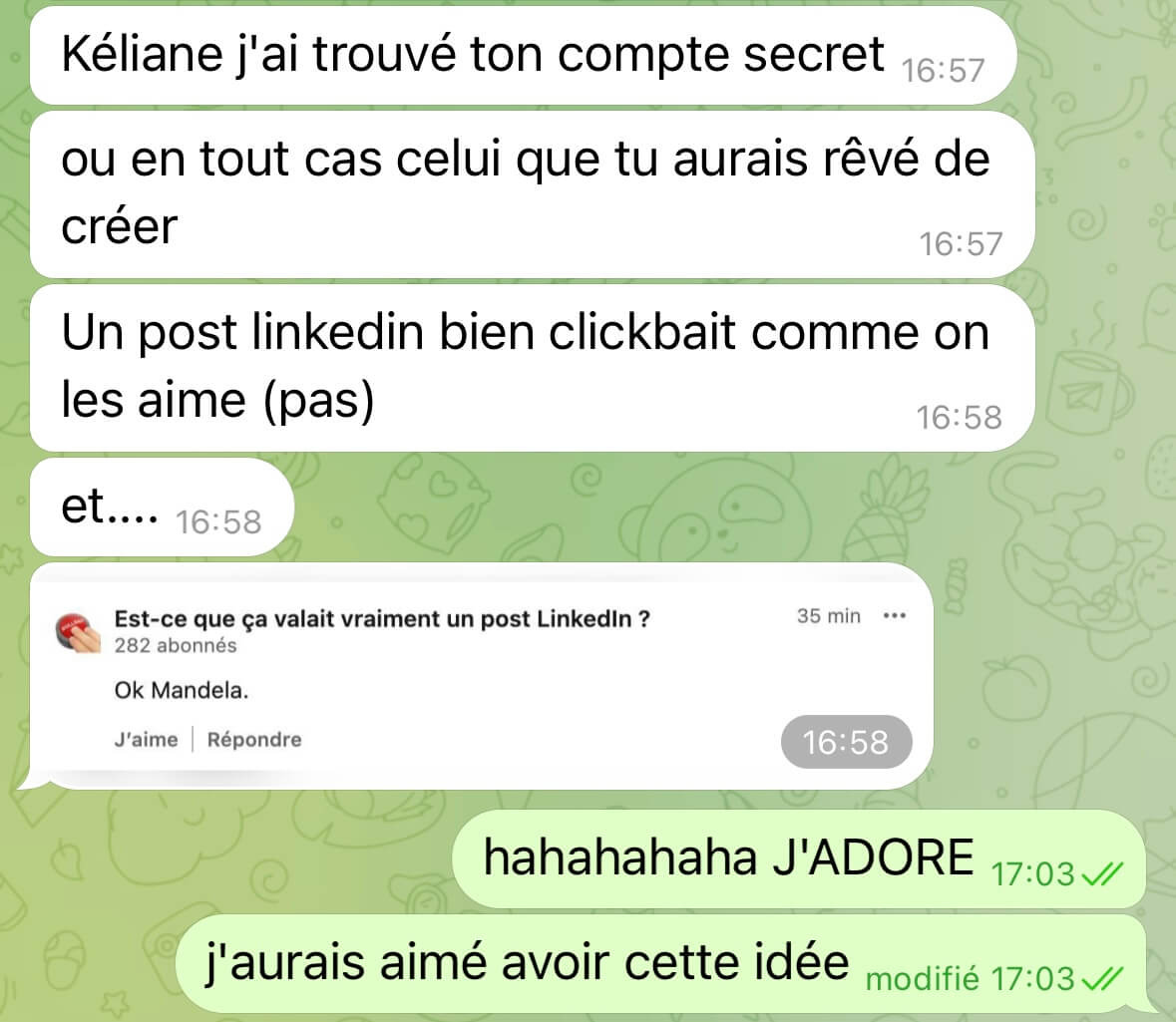
It's called Was it really worth a Linkedin post? The person behind this account has embarked on a (noble) anti-bullshit battle and enjoys simply tackling these clickbait posts in the comments, with "OK Mandela" and other scuds. Tasty stuff.
IT MAY BE A DETAIL FOR YOU, BUT...
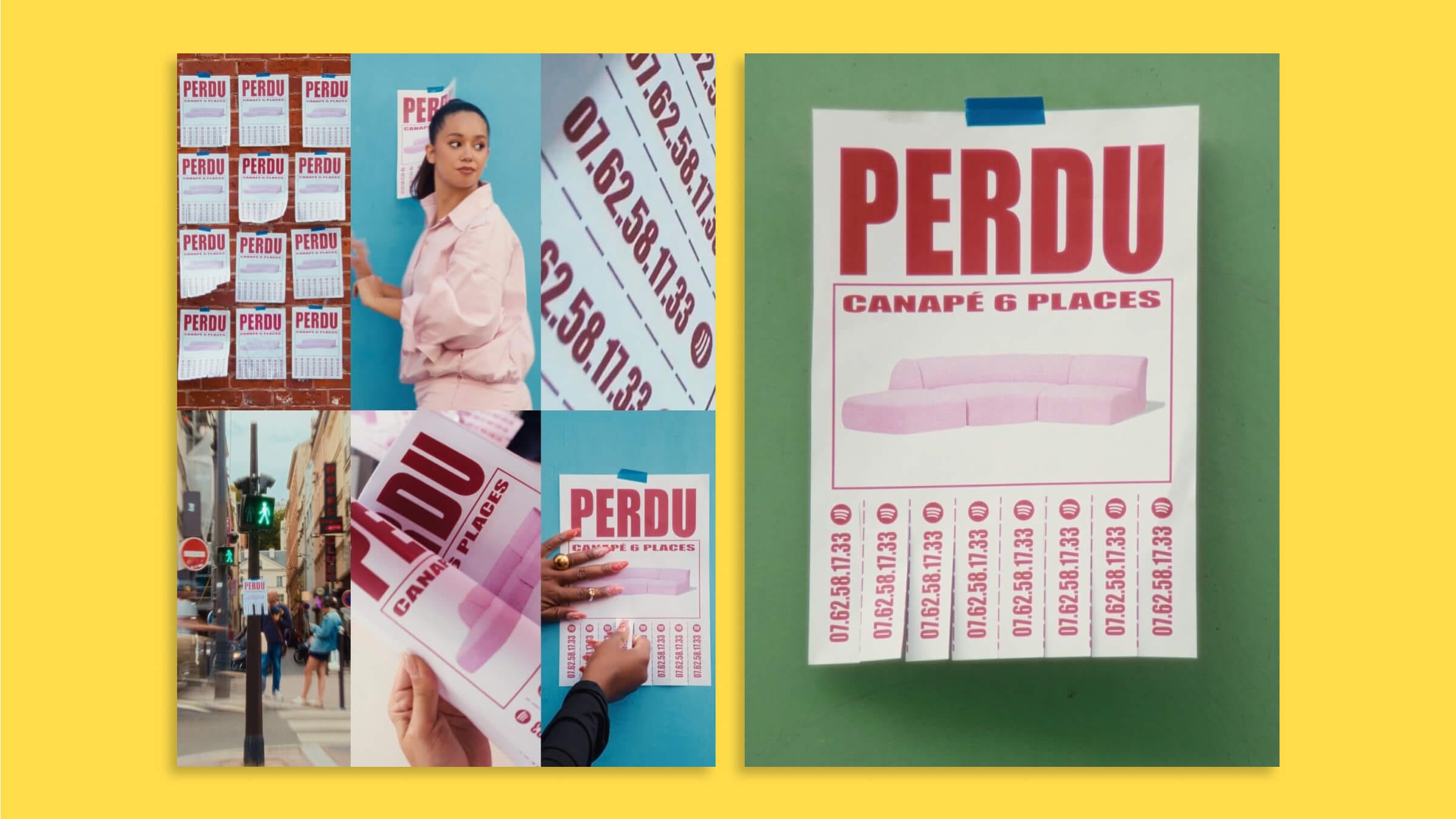
☎️ So call me maybe — The French influencer Léna Situations has plastered posters for her podcast, Canapé 6 places, around Paris. The storytelling? She's lost her sofa and we could help her by leaving messages on the number... I'm told in the earpiece that the reveal of the opé is planned for the fall...
✉️ Once upon a time, there was a blue envelope... — It's rare enough to be highlighted: Mercedes Erra, founder of the French comms agency BETC, took to Linkedin with a very personal post - a far cry from the narcissistic bullshit so common on the platform - to explain how a (banal) colorectal cancer screening test thanks to a kit sent by the Sécu enabled her to detect colon cancer in June at a fortunately early stage that enabled her to treat it. And the CEO takes the opportunity to remind us of the importance of prevention. A fine example of CEO com'.
💬 Tell me what you like to read, I'll give you your next bedside book — I dreamt of it and she (soon) did it: the president of Parisian bookshop l'Ecume des pages launches a very cool project, Devina AI, a conversational literary recommendation engine powered by artificial intelligence to suggest a personalized selection of books based on one's mood and tastes in a matter of seconds.
📈 Duplomb law: how influencers lit (and kept lit) the fuse to make the petition go viral — It's THE topic that monopolized political debate in France in July. If the petition went viral in a few days, it's thanks to the relay by influencers and mainstream/lifestyle personalities, usually far removed from political discussions. Politico's deciphering of this strategy is well worth a look.
📚 The Billyothèque review — In the last issue before the vacations, I told you about IKEA's upcoming op, which installed the largest open-air shared library at the foot of the BNF during the summer: well this is what it looked like!
🎁 Every morning, a book extract — The Proche publishing house launches an ephemeral newsletter during the month of September. The principle? Every morning in your inbox a 3-minute break to read, with a poignant, hard-hitting, funny or upsetting extract from a book. So that your summer reading resolutions don't go out the window with the start of the new school year. I think it's a great idea (and one that can be replicated in other areas that we tend to neglect as we get back into the swing of things - cooking or sport, for example!
🫡 24 hours in the life of... — This is the new brand content format launched by Gaspard G and César Roussel to tell the story of professions in an immersive way for a day. The aim? Surf on a proven editorial concept (inspired - among others - by an American YouTube artist, Michelle Khare) and respond to the problem of how to communicate in an original way about their employer brand.
😮💨 Offline — Violette Dorange, the youngest woman in the Vendée Globe, spoke out at the end of July about her social networking overdose and the mental pressure of this "race for likes". Not insignificant in my view that more and more celebrities are broaching the subject. And she's obviously not the only one to feel it: her post triggered over 76,000 likes (a sweet paradox revealing the Stockholm syndrome we all suffer...) for nearly 640,000 followers who follow her, i.e. a high rate of engagement.
🤳 3 weeks telling the Tour de France story on video — What do Tour de France riders eat for dinner? How are the jerseys prepared each evening? The journalist who covered the TdF for L'Equipe's Instagram and TikTok account reviews the media's social networking strategy (spoiler: 1 video per day, 2M cumulative views e, average per video).
🎈 The Olympic cauldron as a com' support — Sacred coup (and visibility!) by Amnesty International for the 1 year of the Olympics.
📵 Tyler the creator's listening party —To unveil his new album "DON'T TAP THE GLASS", Tyler The Creator organized a listening party with 300 guests. The special feature? A phone-free, camera-free party (well, there are still some videos circulating). The artist describes it as "one of the most beautiful nights of his life". These kinds of very exclusive, very experiential events are likely to multiply, and make more noise than a public launch. Because you have to be there to experience it. Because it forces you to be fully present and enjoy the music.
🍴 A 22.13-meter menu — A creative man had fun recounting all the restaurant offerings on Uber Eats around him in the form of an endless receipt over 22 meters long. The aim? To show the absurdity of this overabundance of choice that has become the norm in our new modes of consumption.
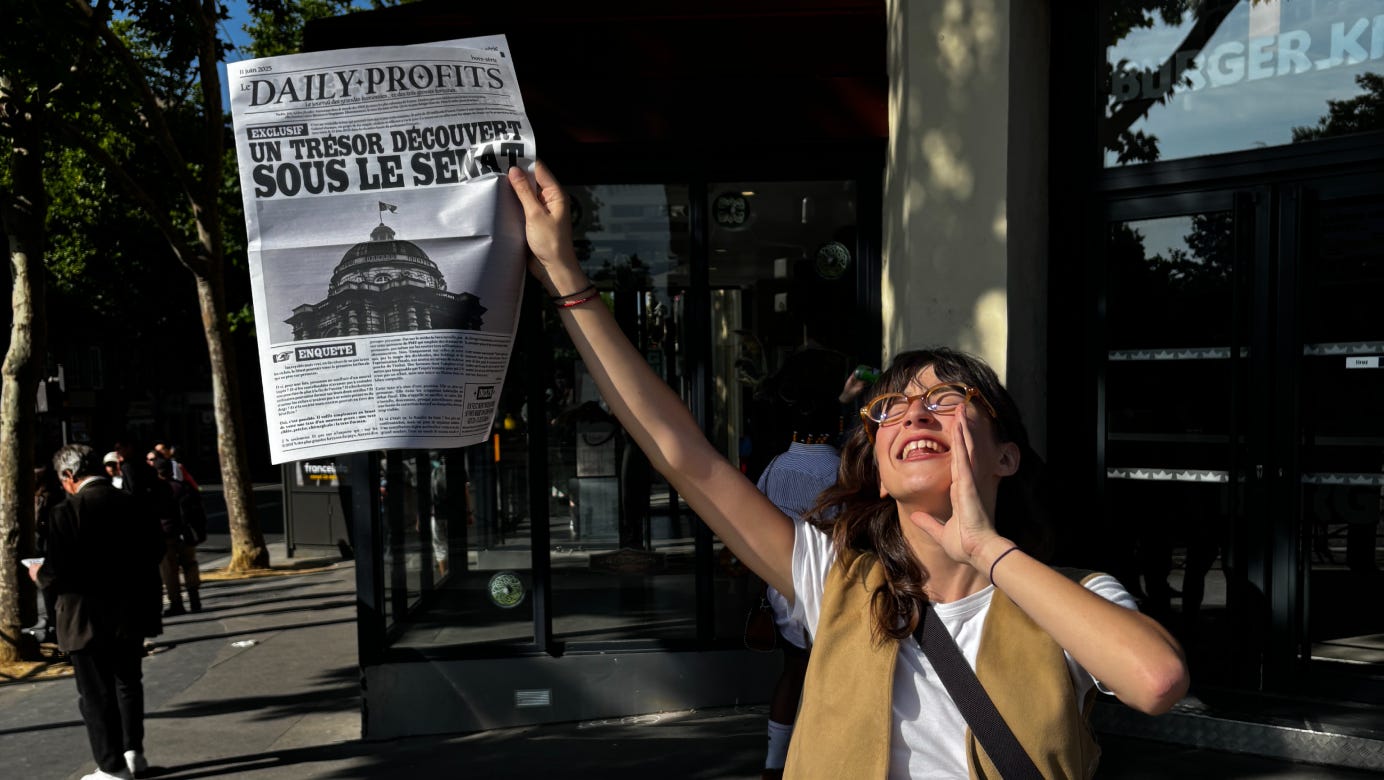
🗞️ The return of the street criers — I think it's particularly clever to have a printed format and go out and promote it last century street-crier-style: that's the good idea of the Le Bruit qui court collective to get information back on the street with a gazette distributed by shout. As Médianes explains, it's "a joyful, embodied strategy for circulating ideas and demands, a way of reaching new audiences, far from screens".
That's all for today! See you on Tuesday, September 9 for the next issue!
📬 Not yet a subscriber? Sign up to receive the next issue:
💌 There's one more thing you can do before you close this email: share these finds with a colleague or friend:
❤️ If you liked this issue, please like it!