
Where people already are
These campaigns that cleverly repurpose everyday objects and practices

Hello there,
I hope you’re making the most of this busy month! As for me, my break in the Lot lived up to its promise of relaxation and rest. I’m hitting the ground running with the organization of two “Dîners de Demain” in one week (those famous dinners we organize for brands, where we introduce them to six emerging thought leaders to inspire and challenge them, with custom-tailored lineups based on their specific challenges), one for a French unicorn, the other for an institutional player: both were incredibly rich in ideas! If you’re a communications director and want to learn more about this format, drop me a line.
But for now, let’s talk about what you’ll find in this issue. This week, I’ve decided to focus on formats that repurpose everyday objects. Why? Because in a world where the battle for attention has never been fiercer, reaching people where they already are is a smart move.
With that, enjoy the read!
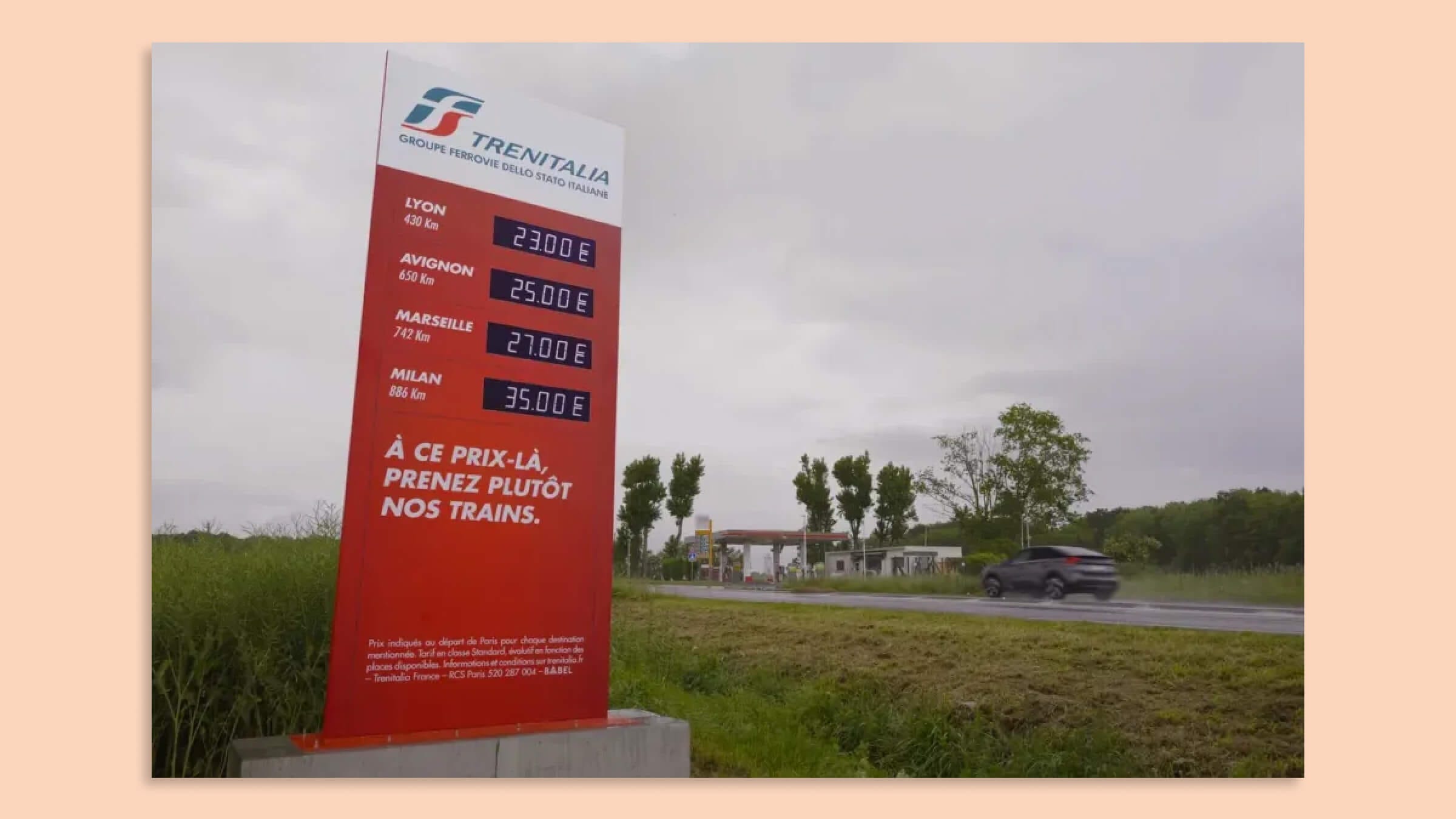
“At that price, you’re better off taking our trains” (or the art of repurposing an everyday object)
In short — For its summer campaign, Trenitalia is drawing inspiration from gas station signage by installing a 4-meter-tall billboard along a local highway—one that displays not fuel prices, but ticket prices for Lyon, Marseille, Avignon, or Milan. The campaign deliberately plays on gas prices to reposition the train as an economical alternative to long-distance car travel.
Why it matters — For taking a very concrete symbol of purchasing power and turning it into a real-life comparison of different modes of transportation. The message it conveys is crystal clear: “At that price, why take the car?” And above all, beyond the PR stunt, the campaign has the merit of being targeted—right by the roadside—to directly reach drivers on the eve of the many trips planned for the May holidays.
→ Take a look behind the scenes of the operation
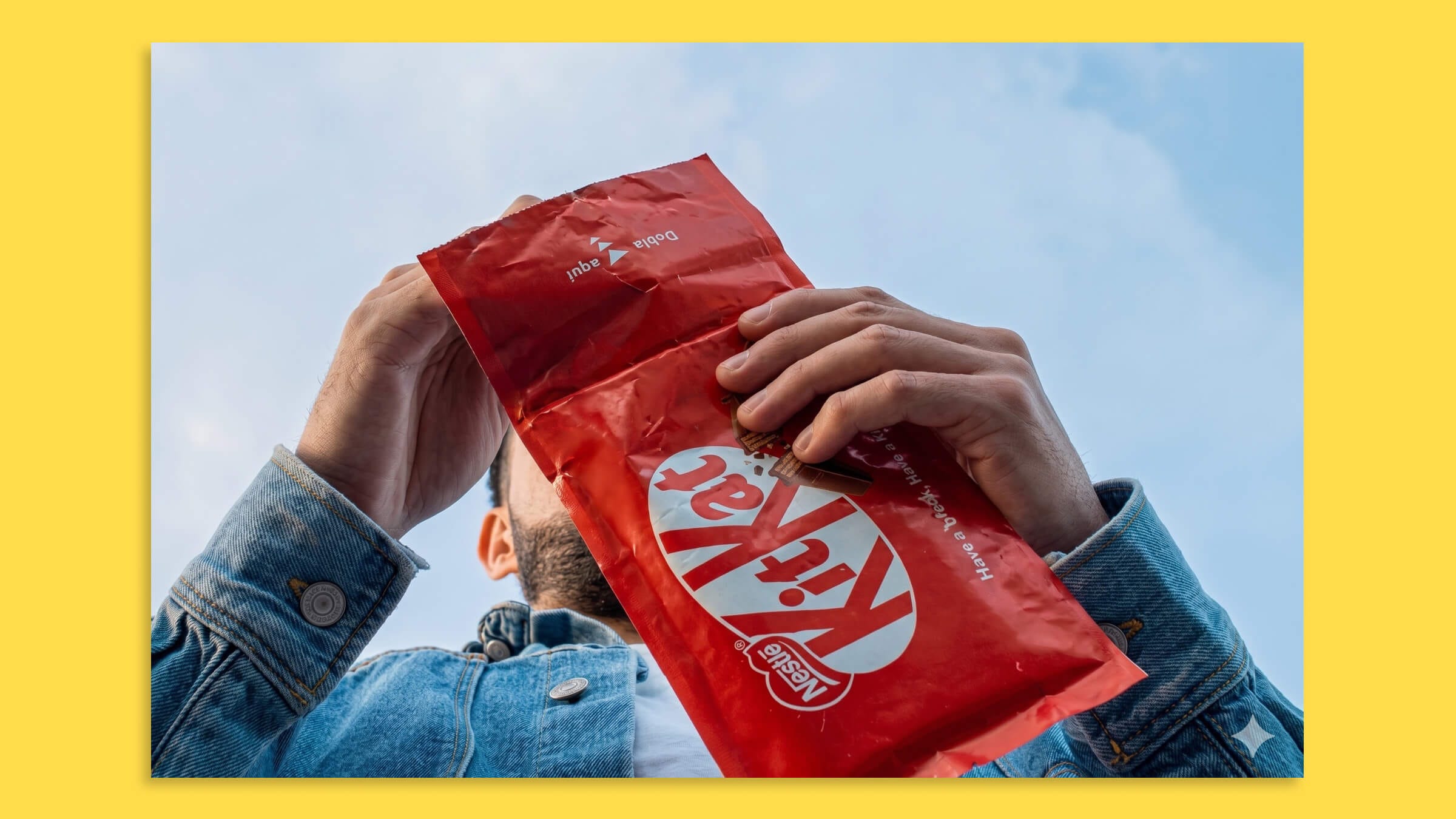
Packaging that doubles as a relaxation pouch
In short — In Panama, KitKat has transformed its packaging into a mini Faraday cage where you can slip your phone to block cellular signals. The campaign was rolled out in places where screen addiction is at its peak—campuses, concerts, tech shows, and more—with a very simple idea: to make disconnecting a physical reality, rather than just a symbolic gesture.
Why it matters — Because this isn’t just a one-off marketing stunt, but part of a much broader brand strategy over the past two years focused on digital fatigue. KitKat is achieving something quite rare: updating a slogan that’s nearly 70 years old without changing it. Whereas “Have a Break” historically meant a coffee or office break, the brand is repositioning it as a break… from screens. What’s particularly clever is that KitKat offers a physical solution to a very real problem: today, many cultural or musical events aim to limit phone use, but existing systems (locked pouches like Yondr, strict bans, etc.) often remain cumbersome, costly, or frustrating for the public.
To go further — The potential for partnerships is enormous: festivals, concerts, movie theaters, bars, book clubs, restaurants, rail companies, hotels… Today, they’re all looking to create more immersive experiences that aren’t overshadowed by screens. KitKat could thus become not just a sponsor, but almost a “disconnection partner” capable of bringing a truly experiential element to events. And in a world where everything is designed to capture our attention, might the brands that truly stand out be the ones that help us… reclaim it?
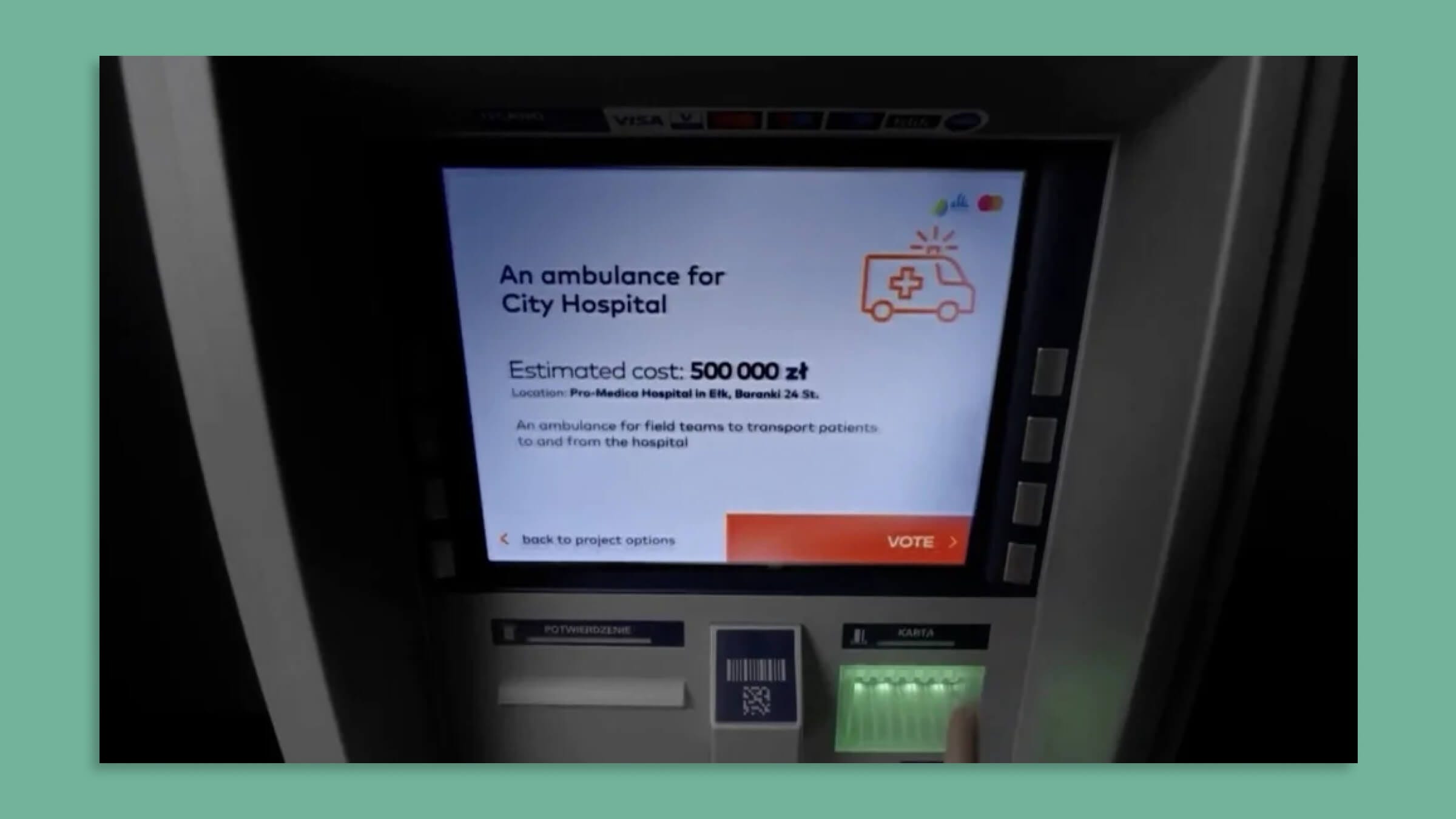
Public Money ATM: when an ATM becomes a tool for democracy
In short — In Poland, Mastercard has transformed ATMs into tools for local democracy with “Public Money ATM.” How does it work? When withdrawing cash, residents can vote directly on the screen to decide where a portion of the municipal budget will be allocated (green spaces, transportation, public facilities, etc.). The idea stems from a simple observation: very few citizens participate in traditional participatory budgeting platforms (11% in Poland), whereas everyone already uses ATMs.
Why it matters — The initiative isn’t about creating a new behavior; rather, it integrates civic engagement into an action that’s already part of daily life. Instead of asking citizens to visit a public platform, Mastercard brings participation directly to where people already go. As a result, more than 20% of users at the participating ATMs cast a vote, and the program is now being expanded to several Polish cities.
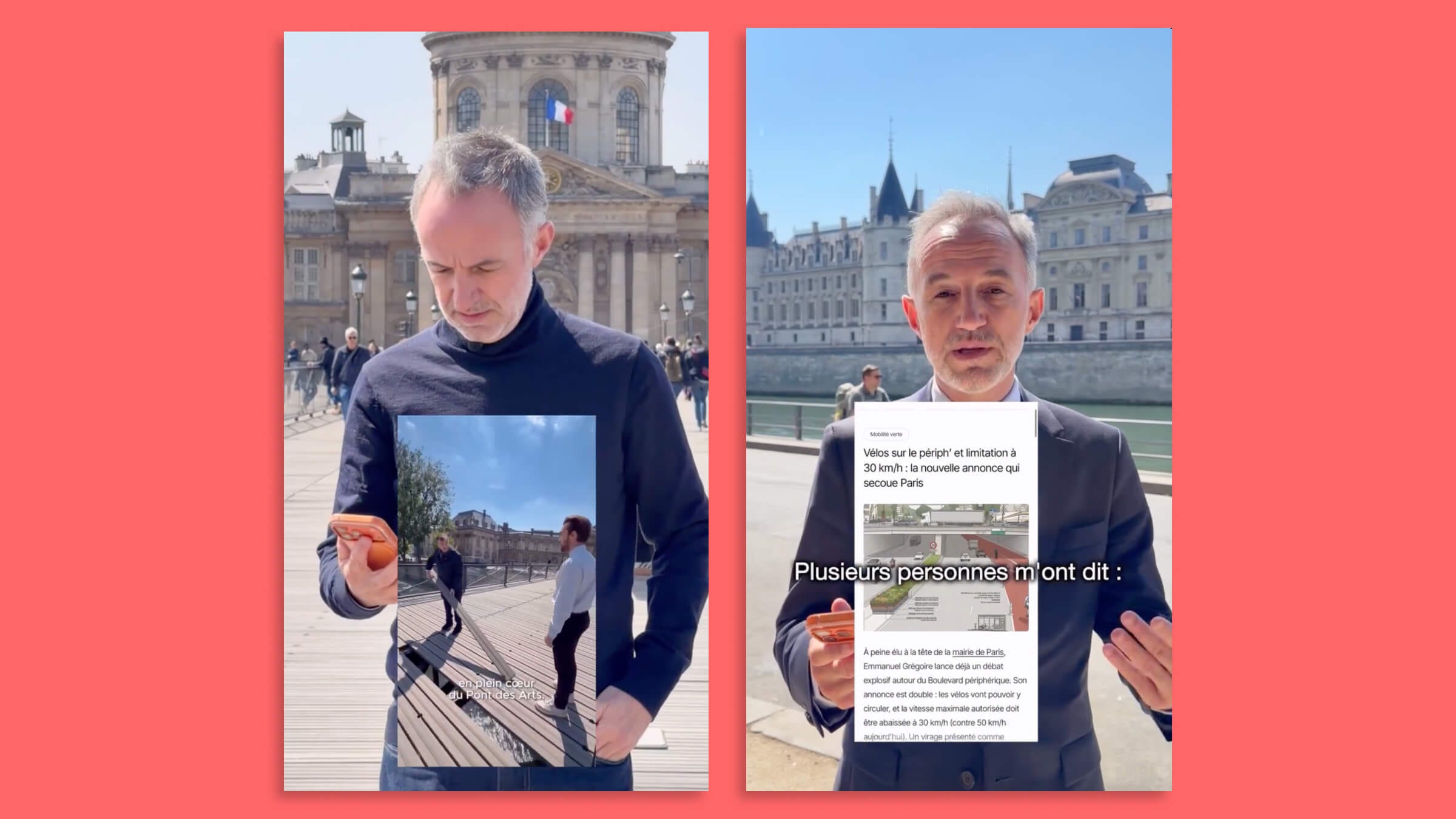
The mayor of Paris turns Instagram into a political customer service channel
In short — For the past few months, Emmanuel Grégoire, the new mayor of Paris, has been developing a fairly distinctive strategy on Instagram: responding directly to the camera—often very quickly—to questions from citizens about Paris (cleanliness, safety, traffic, housing, nuisances, urban planning, etc.). The format is deliberately simple: facing the camera with a small microphone, out in the field, with a superimposed comment or piece of fake news to which he responds, and minimalist editing. A sort of real-time political customer service.
Why it matters — Because it draws more on the conventions of content creators than on those of traditional political communication, which often consists of top-down statements or institutional segments. It is both low-cost to produce and effective in creating a sense of closeness and responsiveness. It is also an interesting strategy from an algorithmic perspective: by turning comments into editorial content, it automatically encourages more interaction since each question can be “rewarded” with a public response.
→ Watch an example of a video that went viral (759k views)
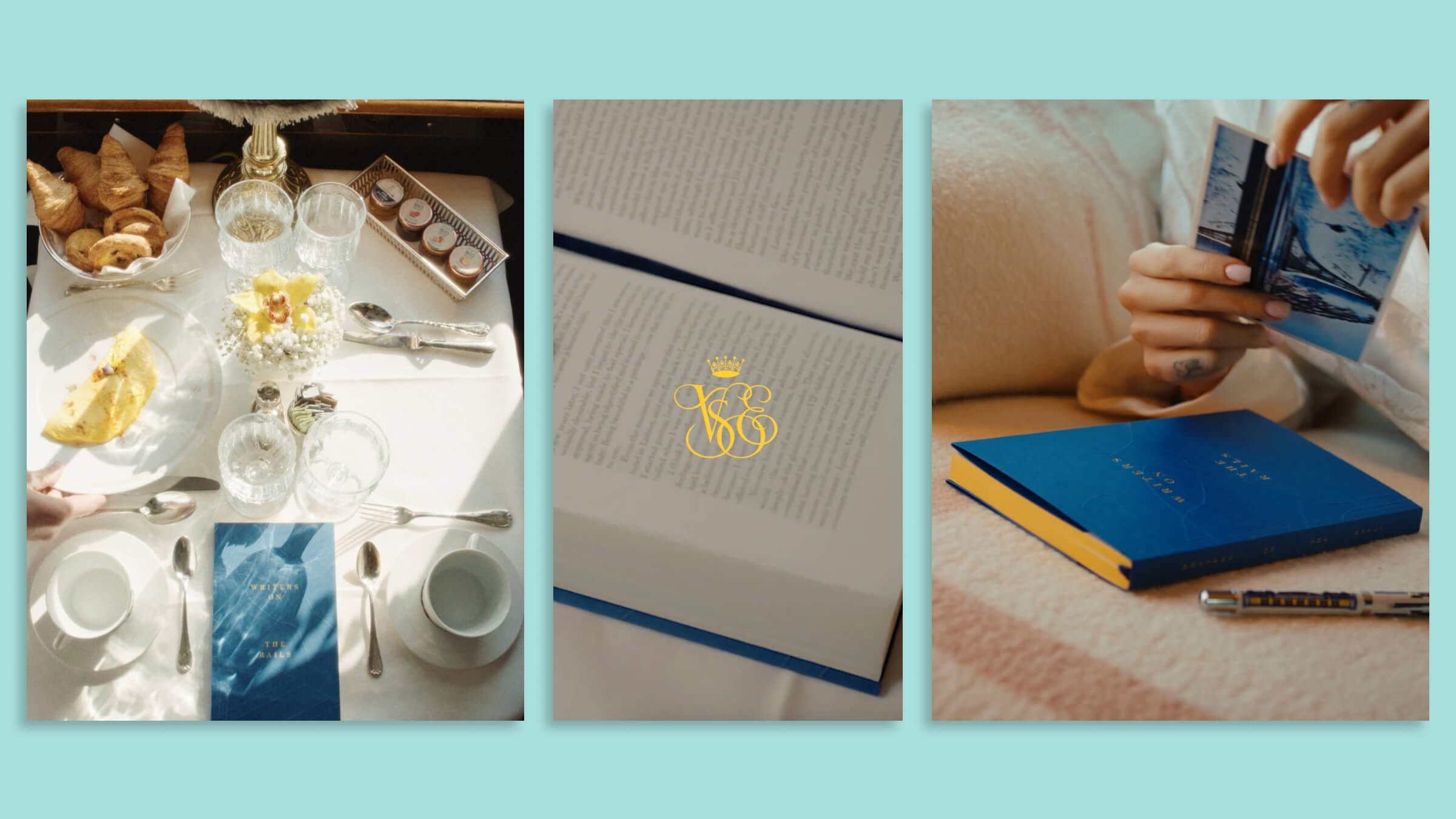
Stories tailored to accompany your train ride
In short — Belmond’s Venice Simplon-Orient-Express has launched “Writers on the Rails”: short stories written by six authors. Each of them was invited aboard for a journey with a very simple assignment: to tell the story that the trip inspired. The stories—inspired by the landscapes, the rhythm of the train, the Art Deco cars, the meals, and scenes of life on board—have been compiled into a book… distributed exclusively to passengers, to accompany the journey and serve as a keepsake to take home.
Why it matters — This legendary train is already deeply rooted in a literary imagination steeped in history: one need only think of Agatha Christie’s *Murder on the Orient Express* and other Hercule Poirot stories set on trains. But I like the idea of creating fiction based on the actual experience of traveling aboard it, of having short stories to read in a unique setting.
To go further — I remain convinced that train operators have a role to play in promoting slow travel and making “disconnecting” one of their selling points (even if it means having Wi-Fi that’s barely functional!): showing that this is where you find the time to read, look out the window, contemplate, and let the journey weave its own story. In any case, I could easily imagine a partnership between the SNCF and a publishing house to ask writers to create short stories—mysteries, comedies…—based on certain routes, printed on leaflets in the style of “Ten Ways to Prepare…”.
→ Check out the Writers on the Rails event
IT MIGHT BE A SMALL DETAIL TO YOU, BUT...
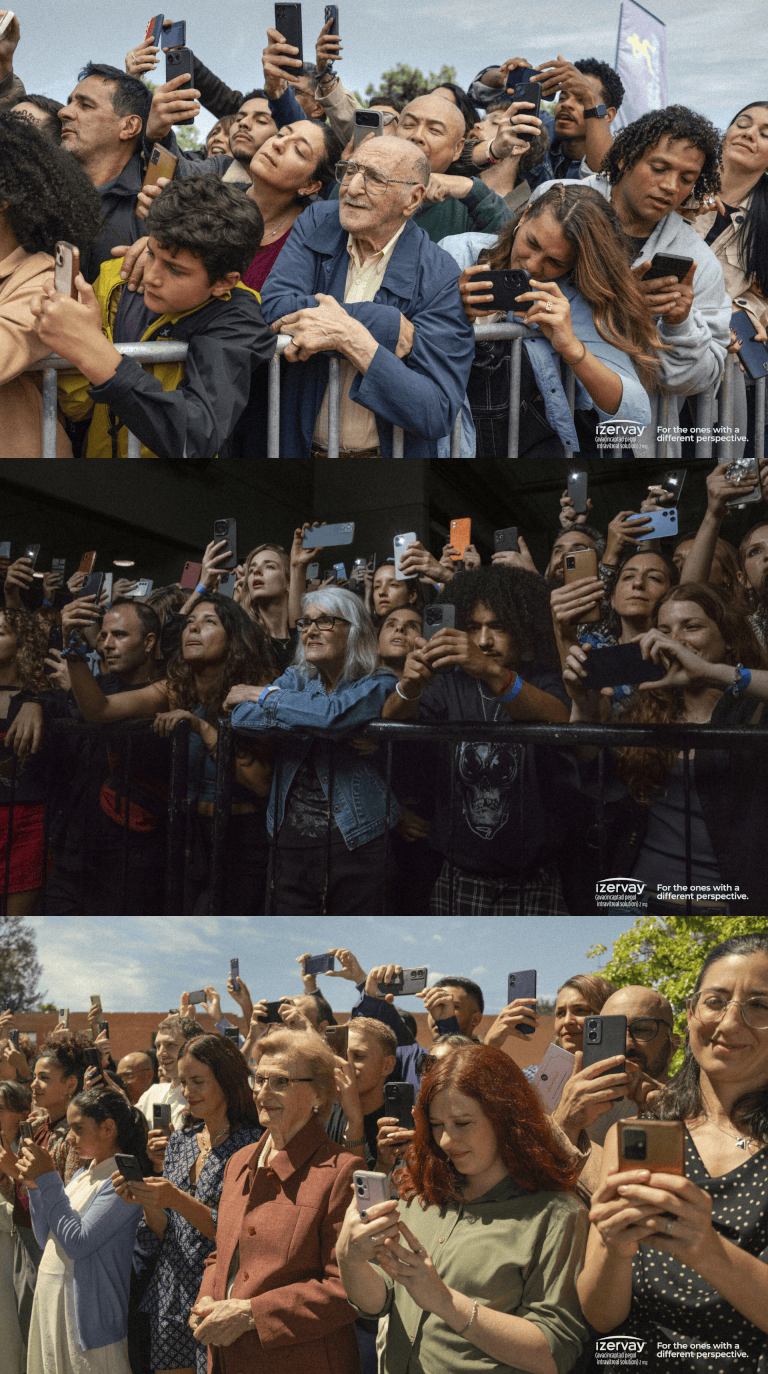
📵 Look away from your phone to see more of the real world — A Japanese pharmaceutical company has launched a campaign for its treatment of an advanced form of degeneration that causes vision loss. Their idea? Photos showing seniors looking up and observing their surroundings… while those around them remain absorbed in their phones. This challenges the stereotype of seniors as being “disconnected” or “behind the times” when it comes to technology. Here, they are the ones who seem to have grasped something before everyone else: looking up from one’s screen becomes a sign of clarity, presence, and even freedom.
👵🏻👴🏻 French Boomers — The X account frenchboomers features Bernard and Chantal, a fictional retired couple who own multiple properties “between Arcachon and Paris,” in a series of deliberately absurd posts about real estate, retirement, and grandchildren. In just a few weeks, the account surpassed 40,000 followers and generated several million views thanks to a highly effective formula: transforming very real generational tensions into fiction—complete with characters, running gags, and a kitschy visual style generated by AI.
💿When was the last time you listened to an album from start to finish? — That’s the question posed by this France Inter column: all our listening habits have changed. We pick and choose tracks from playlists on Spotify or Deezer (who’s still eagerly awaiting album releases?!), we binge-watch series where we used to have to wait a week between episodes back in the days of Friends… Our attention has been fragmented by algorithms. So consuming a work—designed with a specific order and rhythm—without interruption, from start to finish, can almost seem outdated.
👀 Who can really afford the luxury of disconnecting? — All the trend reports talk about a return to the analog world… but in reality, this remains a fantasy reserved for the privileged and, above all, many are merely putting on a show of this so-called return to reality. There’s never been so much talk about disconnecting… on social media. That’s the whole paradox.
🛒 The First Supermarket for Kids — On paper, I think the idea is really cool: a supermarket designed specifically for kids ages 4 to 11, with the goal of teaching them about (healthy) eating through cooking workshops. Except that… it’s in Dubai and run by a major retailer. When will a responsible food company like Too Good To Go, Yuka, or an organization or media outlet pick up on this idea?
🗳️ AI has made its way into the 2026 municipal elections — According to a CEVIPOF study, candidates have made extensive use of generative AI to draft campaign flyers, manifestos, podcasts, visuals, and summaries of public meetings, even in small towns without communications teams. The result: a drastic reduction in production costs, but also a homogenization of messaging and several instances of local misinformation (deepfakes, fake images of safety issues or urban litter).
🎤 The "Madeleine de Proust" street interview — Launched in 2024, the Madeleine de Proust account is based on a super simple concept: asking anonymous people or celebrities on the street what their "Madeleine de Proust" moments are (smells, objects, foods, songs, childhood memories...). The result? 190k Instagram followers in just over a year and videos that regularly exceed several hundred thousand views. Why does it work? Because it has a recognizable and memorable style: a microphone shaped like a giant plush madeleine; very simple interviews, with the same ritualistic question.
💁🏻♀️ Turning mothers' mental load into a giant receipt — For Mother’s Day in Australia, OpenTable created a massive receipt hanging in a Melbourne shopping center, listing dozens of invisible tasks mothers perform over the course of a lifetime (“carried you,” “checked under the bed,” “loved you endlessly”…). Each line is repeated, but the total remains stuck at $0. The takeaway? Even if we can never truly repay our mothers… we can at least treat her to a meal.
🥖 How I Met Your Baker — That’s the name of the TikTok account run by the Federation of Bakery Businesses, which aims to promote and revitalize the baking trade. The most popular video? The mesmerizing sight of lemon tarts rolling by on a conveyor belt.
🍴 Dining in an IKEA showroom — In the Netherlands, IKEA hosted its first Dining Club: for three days, the stores were transformed into pop-up restaurants, where visitors could dine right in the showrooms’ kitchens and living rooms. The goal? To bring its promise of “feeling at home” to life in a real-world setting.
👧🏻 Délibérément kids-friendly — Dans le Nord, plusieurs restos innovent pour essayer d’attirer et fidéliser les familles : carte spéciale, service des enfants en premier pour qu’ils aillent ensuite jouer, jeux à dispo et espaces à part…
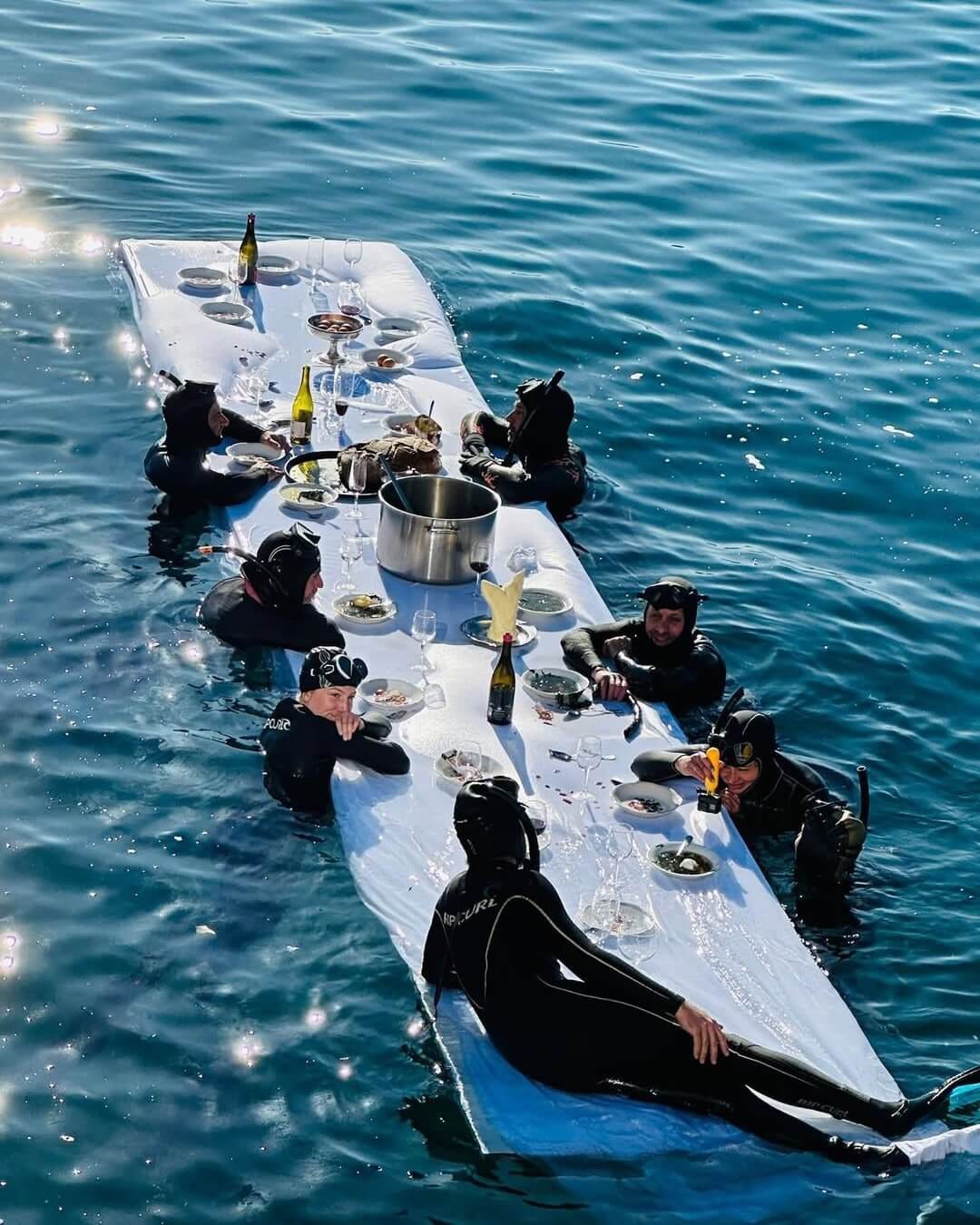
C’est tout pour aujourd’hui ! On se donne rendez-vous mardi 2 juin pour le prochain numéro !
📬 Pas encore abonné ? Inscrivez-vous pour recevoir la prochaine édition :
❤️ Si vous avez aimé cette édition, vous pouvez m’aider avec du bouche-à-oreille : n’hésitez pas à mettre un like et partager ce numéro !